How to Process Calcium Carbonate Mine for Different Applications?
If you own a calcium carbonate mine or limestone quarry, it may not be the best way to sell the raw stone simply. This may not add the value of your mineral resources.
Generally, the raw ore has limited added value. The transportation costs, mining costs, market price fluctuations, and other operating expenses can further reduce your profit margin. It is wiser to first understand the quality of your calcium carbonate ore and then process these different grades of ore for different markets.
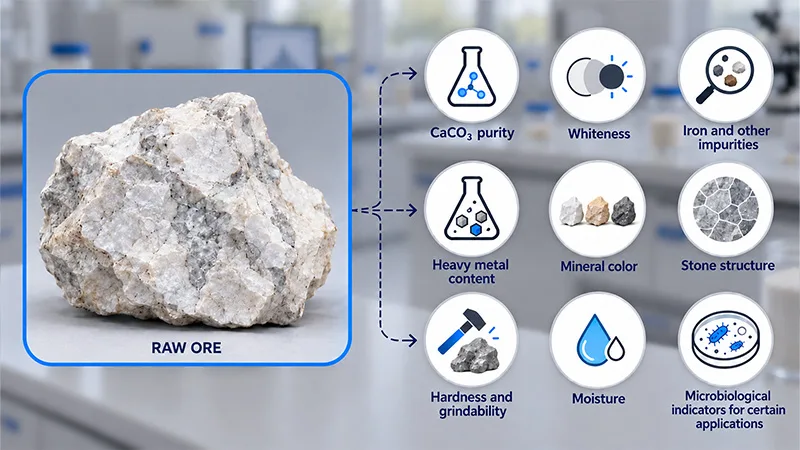
Even within the same calcium carbonate mine, the ore may vary in whiteness, CaCo3, impurity content, color, structure, and other properties. Thus, you do not need to treat all the stone in the same way. You can test, grade, and process these different mineral resources separately.
In this guide, we will explain why limestone grading matters, how to match different ore grades to potential applications, and how to choose the right limestone processing equipment for your project.
Why Should You Evaluate the Calcium Carbonate Ore before Processing?
Calcium carbonate has wide applications in many fields, such as plastics, rubber, paints, coatings, paper, construction materials, and many other industries. They have different requirements for calcium carbonate quality. Before deciding what products to manufacture, you should first analyze the characteristics of your raw ore. For example:
After understanding these mineral resources, you can divide them into several grades and choose a more suitable processing solution for each grade.
How to Match Different Calcium Carbonate Ore to Suitable Markets?
There is no single processing method that delivers the highest value for every calcium carbonate mine. The best choice depends on raw material quality, customer requirements, processing costs, and market demand. The same calcium carbonate use may require very different raw material properties and production methods.
Industrial-grade Ore: A Major Opportunity for Calcium Carbonate Mines
For many calcium carbonate mines, industrial-grade ore represents the main commercially exploitable resource.
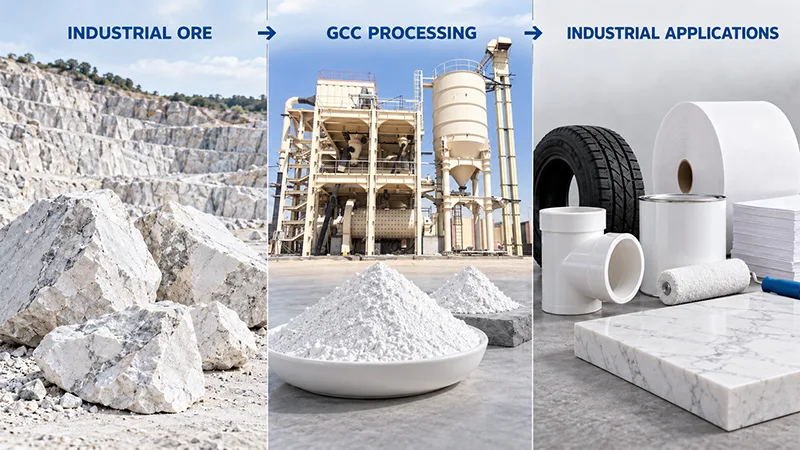
If your ore has suitable whiteness, CaCo3 Purity, and impurity levels, it can be processed into ground calcium carbonate (GCC). Ground calcium carbonate is made by crushing and grinding natural limestone or marble. Through the grinding and classification process, you can turn them into required particle size.
GCC has a broad downstream market and is widely used in plastics, rubber, paints and coatings, construction materials, artificial stone, adhesives and sealants, paper, masterbatch, and so on. This makes industrial GCC one of the most important product directions for calcium carbonate owners.
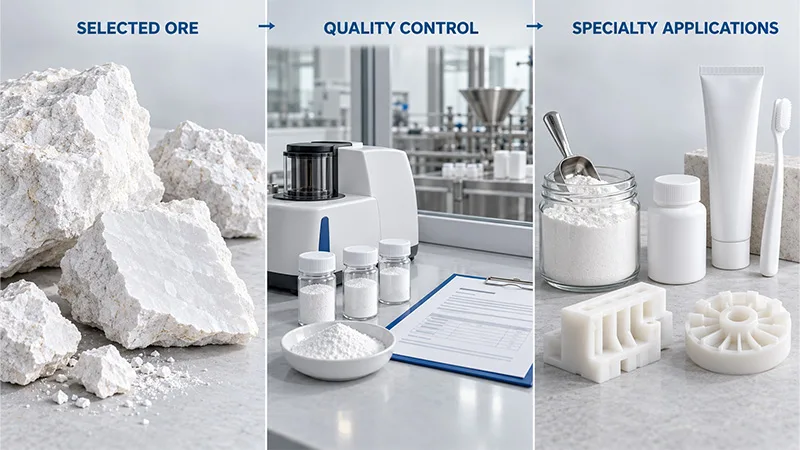
High-purity Calcium Carbonate Ore: Develop Specialty Markets
If your calcium carbonate ore has high purity, high whiteness, and tightly controlled impurities, it may have the potential to enter higher-value markets.
Depending on the raw material properties and relevant product standards, selected high-quality calcium carbonate can be processed for food-grade applications, pharmaceutical-related applications, toothpaste and oral-care products, specialty functional fillers, high-end industrial calcium carbonate, etc.
Generally, these markets have much stricter requirements than ordinary industrial fillers. Raw material purity alone does not determine whether calcium carbonate is suitable for these markets. Depending on the application, manufacturers may also need to control metal contamination, particle size distribution, production cleanliness, microbiological quality, finished powder collection, and packaging.
Low-Whiteness Ore: Consider Construction Applications
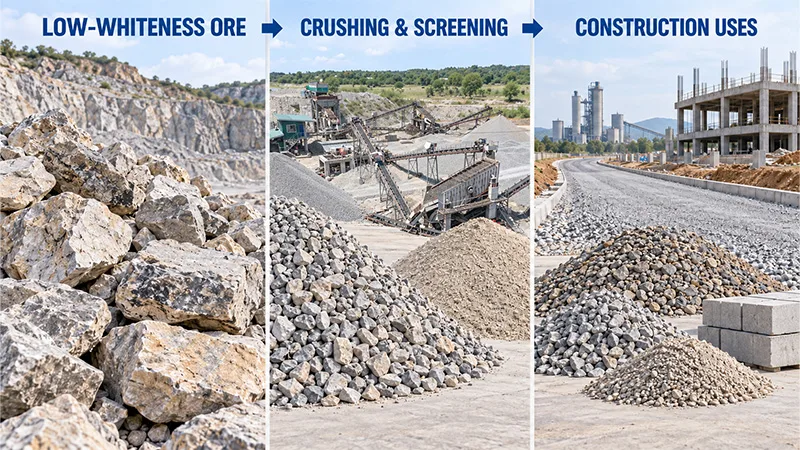
In your calcium carbonate mine, there may also be some lower-whiteness ore, offcuts, irregular stones, and waste rock.
These materials may not be suitable for producing high-grade calcium carbonate powder. But you can also use them for other applications. Depending on the material characteristics and local product requirements, you can process them into:
A limestone crushing and screening system can convert these materials into usable aggregates. Daswell Powder also supplies both crushing systems and concrete machinery for your processing.
High-Quality Blocks: Consider Stone Products Before Grinding
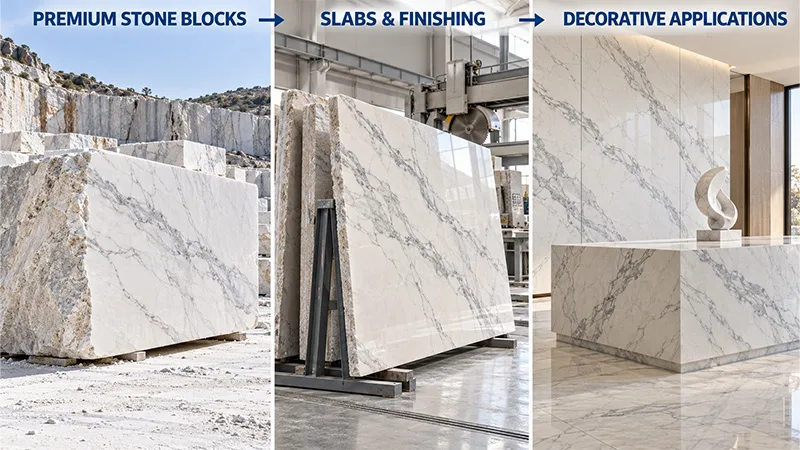
Some high-quality calcium carbonate resources may be better suited to stone products than to powder production. If part of your mine contains large, structurally complete blocks with attractive colors and textures, those blocks may have higher value as decorative stone. You can use them for:
For these applications, the most important consideration is to preserve the integrity of the stone.
This is also one reason that mineral grading is essential before large-scale crushing. Once high-quality blocks are crushed, their potential value as decorative materials may be lost.
How to Choose the Right Calcium Carbonate Processing Equipment for Your Mine?
After grading your calcium carbonate ore and identifying potential markets, the next step is to choose a suitable processing solution. The suitable equipment configuration helps you turn mineral resources into marketable products with controllable costs.
Before investing in a calcium carbonate processing plant, there are several factors you should consider.
Target Products and Market Demand
First, determine which calcium carbonate products you want to produce. And you should analyse that market, whether there is sufficient demand in your target market.
Different applications require different powder fineness, whiteness, purity, and surface properties. These requirements directly influence the crushing, grinding and classification and coating equipment configuration. Daswell Powder offers you different GCC production guides for different applications for your reference.
Suitable Grinding and Processing Technology
Different calcium carbonate products require different processing technologies. The equipment should be selected according to your raw material characteristics, target particle size, and final product requirements.
For example, crushing and screening equipment can be used to produce construction aggregates. Raymond mills are suitable for conventional GCC grinding, while ring roller mills and ball mill with air classifier systems can be used for fine and ultrafine calcium carbonate powder production. We also have grinding mills selection guide for your reference.
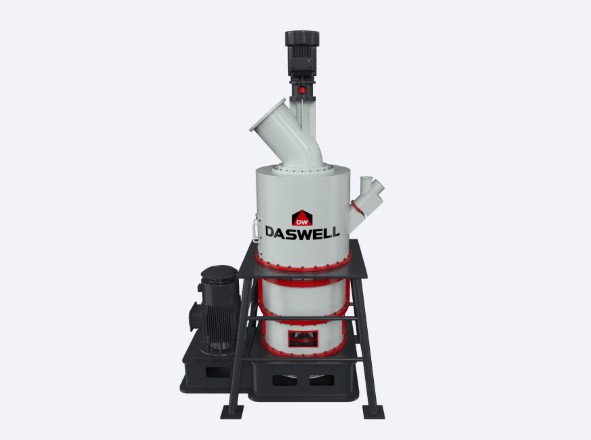
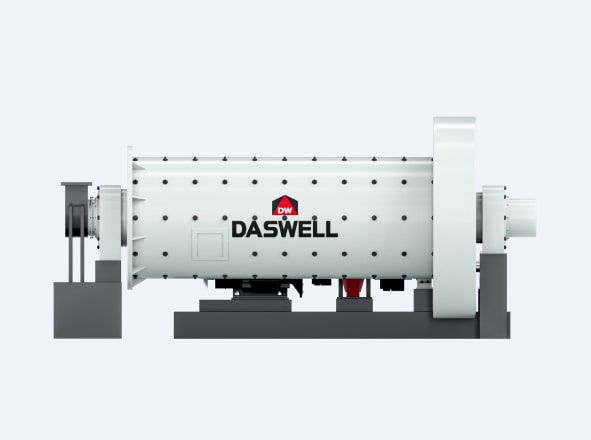
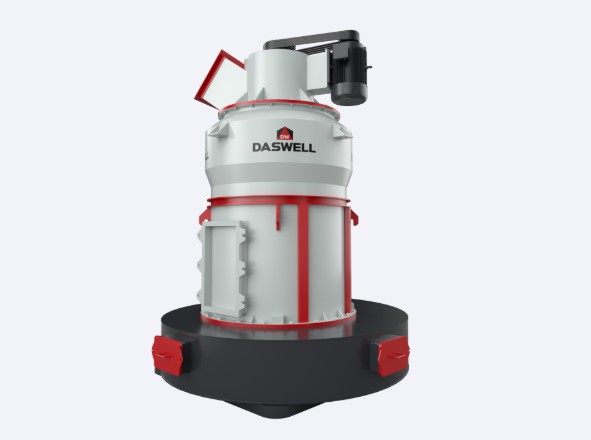
If your target market requires coated GCC powder for plastics, rubber, or other applications, there are also powder surface modification systems for you.
Production Capacity and Operating Costs
Your equipment should match the available ore reserves, expected sales volume, and production schedule. An oversized production line may lead to unnecessary investment, while insufficient capacity may limit your business growth.
Except for the initial equipment investment, you should also consider electricity consumption, grinding media, wear parts, labor, maintenance, and some other operating expenses. Daswell Powder can recommend suitable equipment configurations based on your required capacity and operating conditions. We also provide technical support, spare parts, and local after-sales services in selected markets to help reduce downtime.
Complete Production Line Configuration
A calcium carbonate processing plant involves more than just a crushing or grinding mill machine. From ore selection, feeding, crushing, grinding, classification, collection, conveying, powder surface coating, and packing, Daswell Powder has complete processing solutions to work together for your stable plant operation.
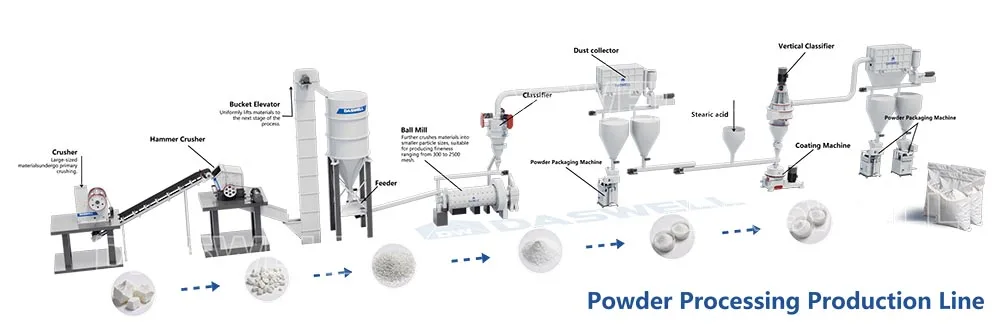
By selecting the right processing technology and equipment configuration, you can make better use of your calcium carbonate resources. Meanwhile, it also improves the long-term profitability of your mine. Contact Daswell Powder Tech. and we can customize your calcium carbonate processing solutions according to your raw material characteristics, target powder specifications, production capacity, and project requirements.