
How Surface Modification Works: Principles and Methods
Nowadays, the powder performance is more critical than the powder fineness in mineral processing industry. In the applications such as plastics, coatings, rubber, and advanced materials, the powder performance determines the product competitiveness and profitability.
Without proper surface modification, ultrafine powder often suffer from:
With right modification process, the same material can achieve:
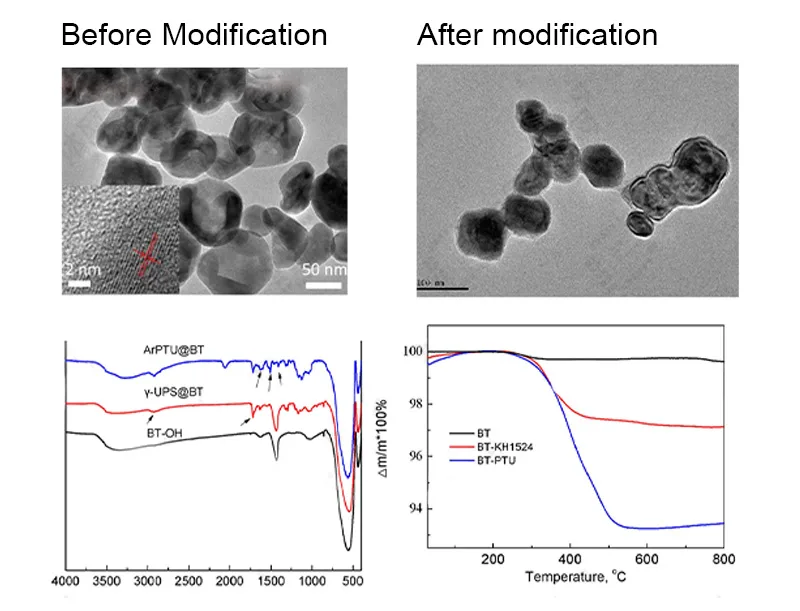
Thus, many powder producers choose surface modification for powder processing.
Daswell Powder Tech. offers you not only the advanced grinding and classifying equipment, but also deliver complete surface coating solutions for your modification. We help customers enhance powder performance, improve compatibility with downstream materials, and increase product value.
What is the core Principle of Surface Modification?
The foundation of surface modification lies in surface regulation.
The ultrafine particles, especially calcium carbonate, silica, and talc, have extremely small particle. They are featured in large specific surface area, high surface energy, and strong inter-particle attraction.
Thus, these mineral powders, which are surface untreated tend to agglomerate easily, show poor dispersion in polymers or liquids, and also reduce the mechanical performance of final products.
Through surface modification process, it can reduce or adjust the surface energy, allowing particles to remain separated and uniformly distributed.
For example, when calcium carbonate powder is surface coated with stearic acid, the particle surface becomes more compatible with polymer matrices such as PP and PE. This modification improves the dispersion of calcium carbonate powder. Meanwhile, this also enhance product’s strength and appearance.
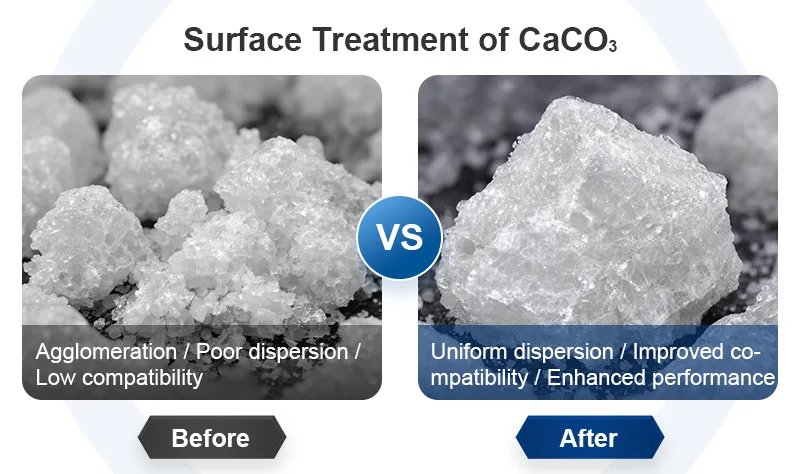
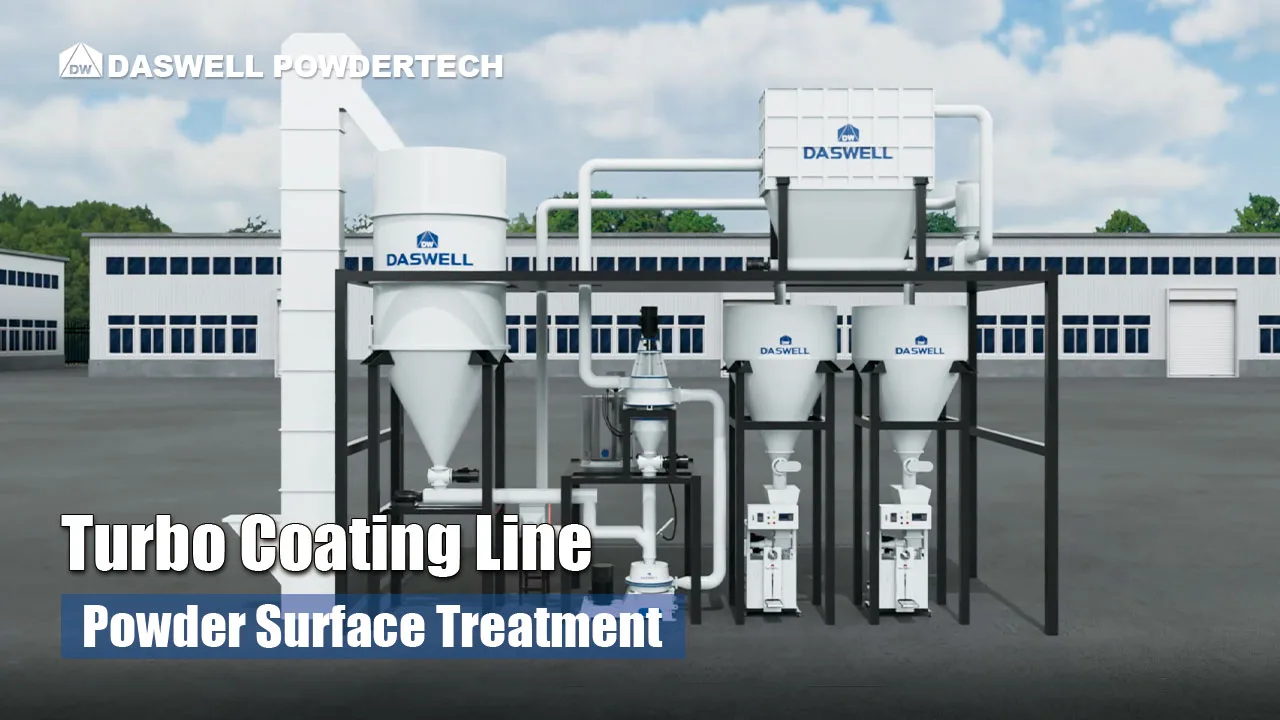
To ensure stable and efficient coating performance, Daswell Powder provides turbo coating machine and three roller coating systems for you to choose. Both of them enable uniform distribution of coating agents and consistent interaction with particle surfaces. Besides, we have rich experience on both calcium carbonate powder grinding and coating solutions, making sure your calcium carbonate powder modification effects.
Surface Functional Group: the Chemical Foundation
Another key factor in surface modification is the presence of surface functional groups.
Typical mineral particles contain, hydroxyl groups (–OH), metal ions (Ca²⁺, Mg²⁺, etc.), and oxygen-containing groups. These functional groups determine how particles interact with other substances.
| Material | Surface Functional Groups |
|---|---|
| Calcium Carbonate | Ca²⁺, –OH |
| Quartz | –OH, Si–O–Si |
| Talc | Si–O–Si, Si–O⁻, Si–OH |
| Kaolin | –OH, Al–OH, Si–O |
| Wollastonite | Si–O–Si, Si–O⁻, Ca–O |
| Mica | Si–O⁻, Al–OH, Si–OH |
Generally, the surface modification changes these interactions by:
For instance, in calcium carbonate powder processing, coating agents react with Ca2+ groups on the particle surface, forming a hydrophobic layer. This transformation is essential for improving compatibility with organic materials.
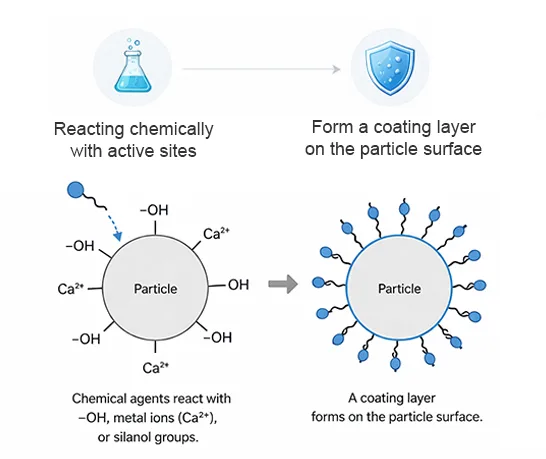
Daswell Powder has different coating machines for your surface modification. Based on your material properties, modification effect requirements, and production capacities, we can customize your own pwoder coating solutions.
Key Performance Indicator: Wettability and Contact Angle
Wettability is a critical parameter in powder applications. It describes how liquids interact with solid surfaces. Generally, it is commonly evaluated using the contact angle:
Most mineral powders are naturally hydrophilic. However, in applications such as plastics and rubber, hydrophobic will be better.
Through surface modification, the wettability will be adjusted by covering hydrophilic groups, introducing hydrophobic chains, and changing surface polarity.
Then, the modified powder can better integrate into polymer systems, improving dispersion, processing stability, and mechanical properties.
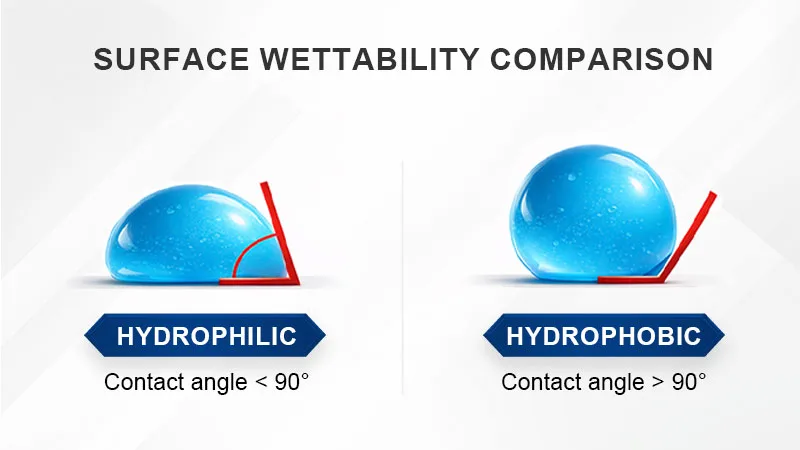
This is especially important for industries such as masterbatch production, plastic compounding, and non-woven materials. For example, in plastic applications, modified powders allow:
This helps manufacturers reduce production costs while maintaining or improving product performance. Thereupon, it also significantly enhances market competitiveness.
What are Main Surface Modification Methods?
According to the final application requirements and production conditions, there are different methods for your surface modification.
Physical Coating
This method involves coating a layer of material onto the particle surface without chemical bonding. Utilize this method for powder surface modification, it is suitable for large-scale powder modification with simple process and low cost. But it has weaker bonding strength and lower durability.
It is commonly used for general-purpose fillers where high performance is not required.
Chemical Modification
Chemical modification involves reactions between modifying agents and surface functional groups. The advantages are strong and stable bonding, long-lasting performance, and better compatibility with polymers. This method is widely used in high-end applications such as plastic masterbatch, high-performance coatings, and advanced materials.
Our coating systems are designed to provide precise control over reaction temperature, agent dosage, and residence time, ensuring optimal chemical modification efficiency.
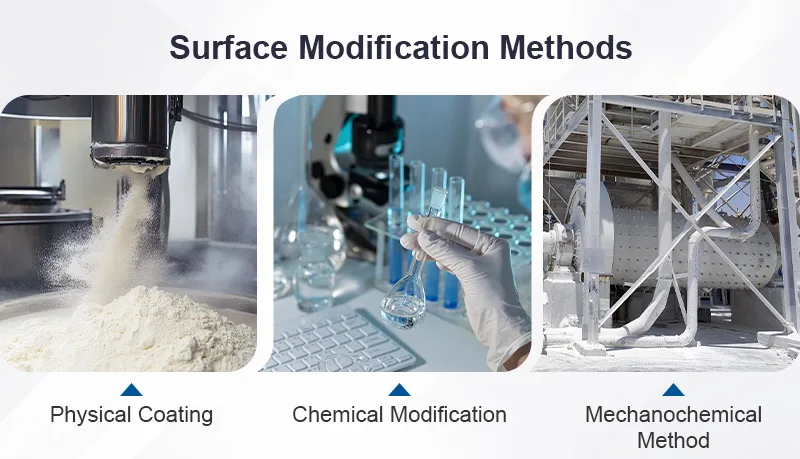
Mechanochemical Method
This modification method mainly utilizes mechanical force for enhancing chemical reactions during processing. It combines grinding, mixing, and coating in one system, the mechanchemical modification offers improved reaction efficiency, reduced processing steps, and energy savings.
This method is especially suitable for integrated production lines where grinding are modification are closely connected.
Two Types Powder Surface Modification Process: Dry Processing VS Wet Processing
For your ultrafine powder modification, there are dry and wet processing methods for your different requirements. Choosing between dry and wet modification depends on the product requirements, cost considerations, and application standards.
Dry modification is the most commonly used method in industrial mineral ultrafine powder processing, especially for materials like calcium carbonate. Powders are modified in a dry state, typically using high-speed mixing or specialized coating equipment such as turbo coating machines.
It has lower investment and operating cost. And you do not need to dry the finished powders with simpler process flow. It is suitable for large-scale production.
At Daswell Powder Tech. we provide complete powder coating solution for you. And it can be integrated with powder grinding line, including crushing, grinding, classifying and packing.
The wet modification is performed in a liquid medium. The powders are dispersed in water or solvents before modification. This method is commonly used for high-end or precision applications.
It has better coating uniformity and more complete chemical reactions. While, it also requires additional drying equipment and higher energy consumption. Meanwhile, the process control is more complex. This modification technology is typically used in industries, where requires strict particle morphology and dispersion performance.
Daswell Powder Tech. has been customizing powder processing solutions for our customers with over 10 years’ experience. From crushing, grinding to coating, we have different solutions for your requirements. And whether you prefer dry or wet powder processing, our technical team can design according to your material, final application, and budget.
We helps customers achieve efficient production, stable quality, and higher product value. If you are interested in mineral powder surface modification, just send an inquiry to us.