Need Finer Powder and Stable Production? Here’s What To Know About Raymond Mills
When it comes to producing fine mineral powder, the Raymond mill is a widely used grinding solution for small and medium-sized processing plants.
Producing fine mineral powder is not simply about choosing a grinding machine with a high fineness rating. For example, if your target is 400-mesh powder, the final result depends on the entire grinding system.
But what actually determines whether a Raymond mill can produce the fineness and output you need? Let’s look at the process from the ground up.
What is a Raymond mill?
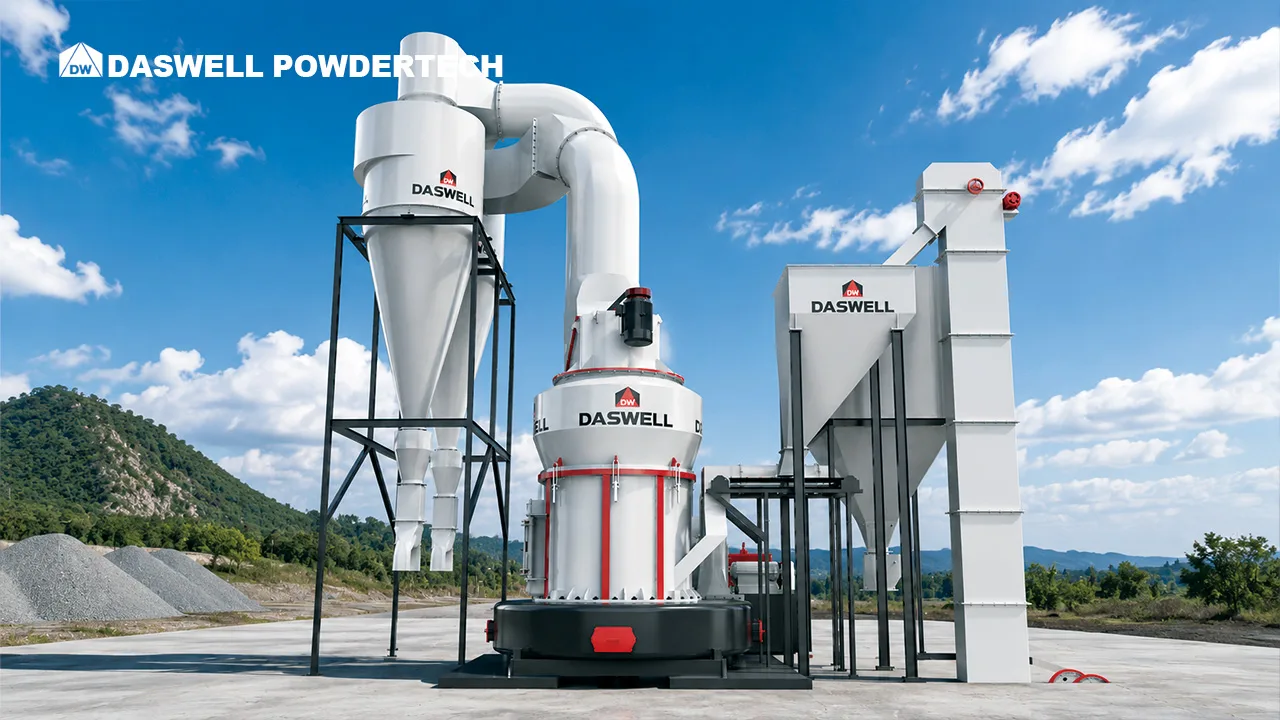
The Raymond mill, also known as a pendulum roller mill, is a type of grinding equipment designed to process mineral materials into fine powder. Its main components include a feeder, grinding rollers, a grinding ring, a drive system, and a classifier.
It is particularly suitable for mineral grinding operations that require precise particle size control and continuous production. Depending on material characteristics and system configuration, the Raymond mill can process a wide range of minerals with soft to medium hardness.
How Does a Raymond Mill Work?
The Raymond mill working principle is based on the interaction between centrifugal force, grinding rollers, and the grinding ring.
The grinding rollers are suspended from a central spider frame. During operation, each roller rotates around its own axis while also revolving around the main shaft. Centrifugal force pushes the rollers outward against the grinding ring.
As raw material enters the grinding chamber, internal scoops lift and direct the material into the grinding zone between the rollers and ring. The material is crushed and ground into fine powder through this repeated grinding action.
The ground material is then carried by airflow toward the classifier. This means that grinding and classification work together to control the final product size.
After grinding, airflow carries the powder upward to the classifier. The classifier separates particles according to size. Qualified fine particles move toward the collection system, while coarser particles remain in the grinding circuit for further processing.
For customers searching for different mesh powder, the actual achievable fineness and production rate depend on the specific material and operating conditions
However, Therefore, equipment selection should be based on your raw material, required fineness, and production capacity, rather than fineness alone.
Raymond Mill Processing Line:
From Raw Material to Finished Powder
A typical Raymond mill processing line can include the following stages.
1. Raw Material Pre-treatment
For materials such as chalk, calcite, limestone, and marble, washing or sorting may be required to help maintain the whiteness of the finished powder.
2. Crushing
Large pieces of raw ore cannot normally be fed directly into the grinding chamber.
A jaw crusher can reduce the raw material to less than 30 mm before it enters the grinding system.
Proper feed preparation helps provide a more stable grinding process.
3. Conveying and Storage
After crushing, a bucket elevator transports the material to the hopper, where it can be stored before controlled feeding into the mill.
Stable material flow is important because inconsistent feeding can affect the overall operation of the grinding system.
4. Grinding
An electromagnetic feeder continuously sends material into the Raymond mill.
Inside the grinding chamber, the rollers press the material against the grinding ring, reducing it to fine powder.
5. Classification
Strong airflow carries the ground powder up to the top classifier for precise sizing.
6. Powder Collection
Qualified powder enters the dust collector, where the powder is separated from the conveying air.
7. Packaging
The settled powder can then be packed into sealed bulk bags for storage, transportation, and sale.
8. Air Circulation and Dust Removal
The Raymond mill system operates with a closed air circulation system. Air returns to the mill, while excess exhaust is filtered through a pulse dust collector.
This integrated airflow system connects grinding, classification, collection, and dust removal into one continuous process.
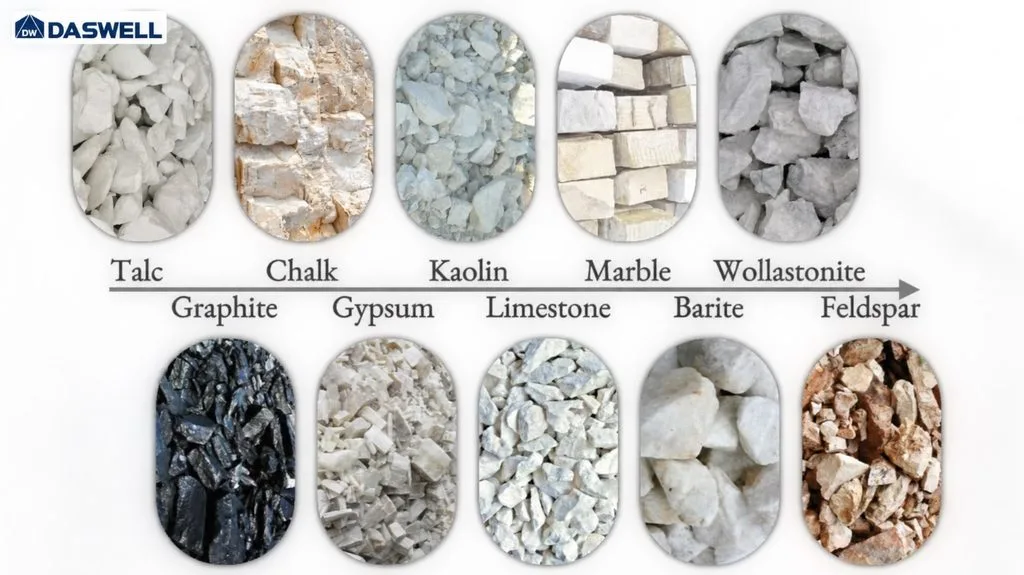
What Materials Can a Raymond Mill Process?
The Raymond mill can be used for a broad range of soft to medium-hard minerals.
What Should You Consider Before Buying a Raymond Mill?
Choosing a Raymond mill based only on the advertised model or maximum fineness can lead to an unsuitable configuration.
Before purchasing equipment, please consider several key questions.
1. What Is Your Raw Material?
Different minerals have different hardness, moisture, and grinding characteristics. The supplied technical information specifies materials with hardness below 7 Mohs and moisture below 6%.
2. What Product Fineness Do You Need?
A requirement such as 400 mesh should be clearly defined before equipment selection. The grinding and classification system needs to be configured around the required final product.
3. How Much Powder Do You Need To Produce?
A small plant and a large commercial production line have very different equipment requirements. Production capacity should therefore be considered together with the required fineness.
4. What Is The Complete Process?
The Raymond mill is only one part of the production line. Crushing, feeding, conveying, classification, powder collection, packaging, and dust removal all affect the overall process.
Looking at the complete system rather than the grinding machine alone can help avoid bottlenecks later.
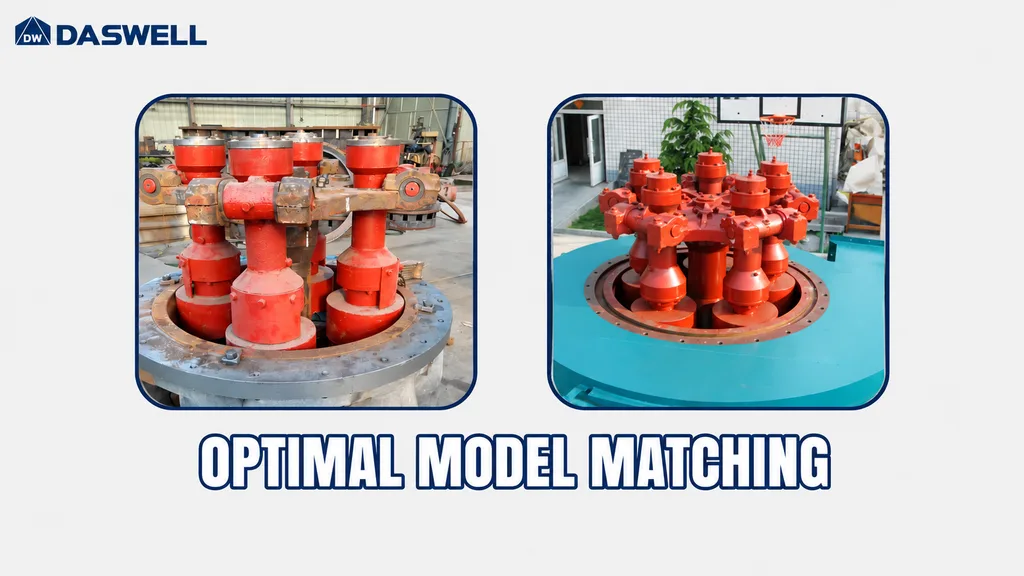
Case Reference: 4-Roller vs. 5-Roller Raymond Mill
—Which One Suits Your works?
Choosing between a 4-roller and 5-roller Raymond mill should start with your production requirements rather than simply choosing the larger machine.
- 4-Roller Raymond Mill
A 4-roller configuration is suitable for small and medium-sized production lines. The supplied material describes this option as providing high-fineness grinding while keeping energy consumption and maintenance costs relatively low.
- 5-Roller Raymond Mill
For larger-scale production, a 5-roller Raymond mill can be considered. It is intended for higher-throughput applications and ultra-fine powder production.
A Simple Selection Guide
|
Requirement |
Suggested Option |
|
Small to medium production |
4-roller Raymond mill |
|
High-fineness grinding |
4-roller or 5-roller,depending on requirements |
|
Large-scale production |
5-roller Raymond mill |
|
Higher throughput requirements |
5-roller Raymond mill |
|
Lower equipment and maintenance costs |
4-roller Raymond mill |
If you are planning a new grinding line, evaluating these factors first can help you select a Raymond mill configuration that fits your actual production needs.