What Is Chalk and How Is It Processed into GCC Powder?
When you walk outdoors and notice white earth or white rocks beneath your feet, you may be standing on one of the world’s most important industrial minerals, chalk.
Although it looks ordinary, chalk is actually a valuable natural source of calcium carbonate. It is one of the most widely used industrial raw materials in the world. Global calcium carbonate demand reaches nearly 100 million tons every year. Nowadays, calcium carbonate products are deeply integrated into modern manufacturing and daily life.
With advanced grinding, classifying, and coating technologies, chalk can be transformed into high-value functional GCC powder for modern industries.
What is Chalk?
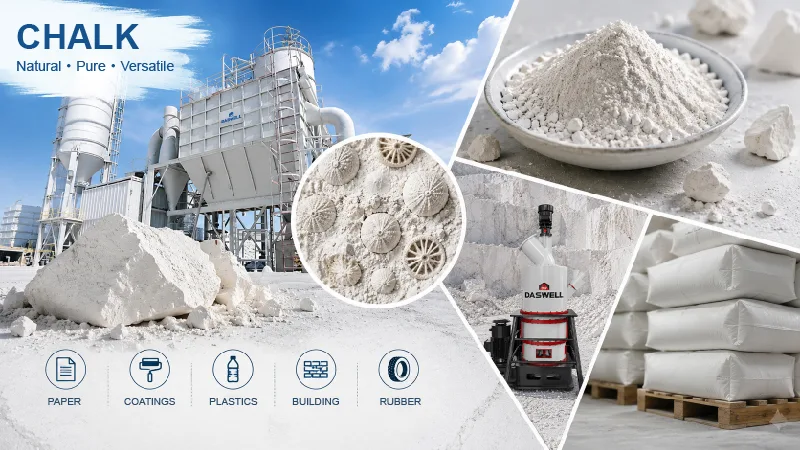
Chalk is a soft, white, porous type of limestone mainly composed of calcite. Its primary component is calcium carbonate. Different from ordinary limestone, chalk has extremely fine and uniform particles. It can often be crushed easily by hand due to its soft texture. Its high calcium carbonate purity and natural whiteness make it particularly suitable for industrial powder processing applications.
This mineral was formed millions of years ago through the accumulation of microscopic marine organisms such as Coccolithophores. These organisms has calcium carbonate shells, which gradually accumulated on the seabed and eventually formed thick chalk deposits.
Today, chalk deposits are widely distributed in Europe, North America, Western Australia, and many parts of the Northern Hemisphere. One of the most famous examples is the White Cliffs of Dover in the United Kingdom. These massive white cliffs clearly demonstrate the large-scale natural accumulation of chalk over millions of years.
Historically, humans have used chalk for centuries. In ancient China, chalk was used as a protective coating material for murals and walls. In Europe during the 1800s, chalk became the main material for classroom chalk sticks because of its smooth writing performance and low dust generation.
However, compared with its historical uses, the modern industrial value of chalk is far greater.
What are the Applications of Chalk in Modern Industry?
Today, the most important use of chalk is producing Ground Calcium Carbonate. Through crushing, grinding, classifying, and surface coating technologies, you can turn raw chalk into high-value calcium carbonate powder for various industrial applications. These powdery products are widely used as fillers, functional additives, pigments, and reinforcing materials in many industries.
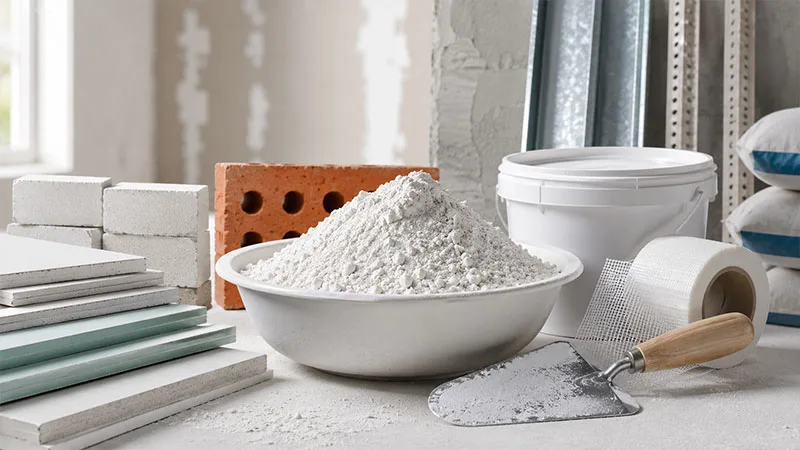
Putty Powder and Construction Materials
In construction materials, GCC is widely used in putty powder, dry mortar, tile adhesives, and wall coatings. In many putty powder formulations, calcium carbonate can account for 70% to 80% of the total formula.
GCC helps improve whiteness, workability, smoothness, and cost efficiency. And the fine GCC powder also improves coating coverage and wall surface quality.
Paper Industry
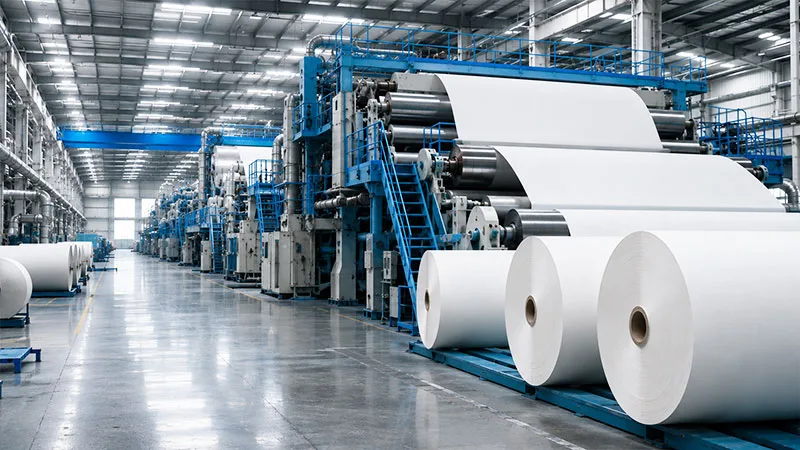
The paper industry is one of the largest consumers of GCC powder. In paper manufacturing, GCC improves paper brightness and opacity, smoothness, and printability.
Ultrafine GCC powder is especially important for high-grade paper products, where particle size distribution and whiteness directly affect the final product performance.
Plastics and Masterbatch
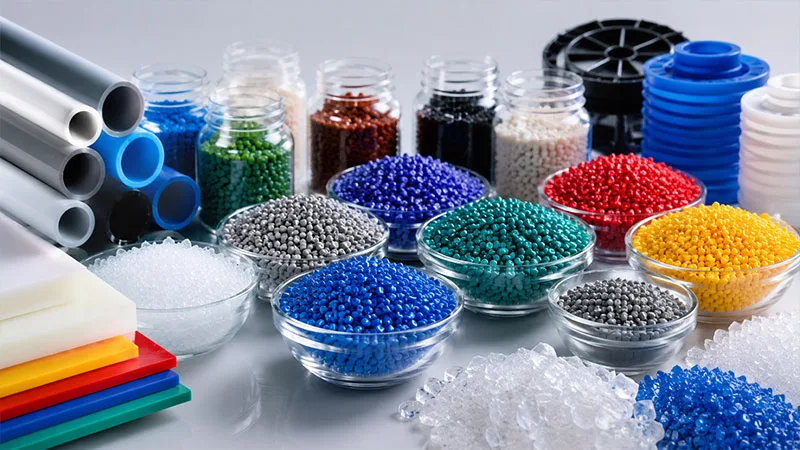
In plastic rubber industries, the modified calcium carbonate is widely used as a functional filler. Modified calcium carbonate powder improves filler loading, dispersion, dimensional stability, and mechanical performance. It also helps reduce resin consumption and overall production costs.
And the surface coated powders are particularly important in polypropylene and polyethylene because it improves compatibility between inorganic powders and organic polymers.
Rubber, Sealants, and Coatings
In rubber applications, calcium carbonate helps improve product strength and processing performance. Fine or surface-modified calcium carbonate can also improve dispersion and product consistency in high-performance rubber products.
In sealants and coatings, GCC serves as both a filler and a functional material. Fine GCC powder improves viscosity control, surface smoothness, suspension stability, and cost efficiency.

The calcium carbonate has become an essential industrial material in modern manufacturing. Except for the industries mentioned above, chalk-based GCC is also widely used in toothpaste, breathable films, artificial stone, feed additives, pharmaceutical products, cosmetics, cable compounds, adhesives, and so on.
As industrial technology continues to develop, the demand for ultrafine and functional calcium carbonate powder is increasing rapidly. Daswell Powder has rich experience and always explores advanced technology for updating our powder processing systems. If you have interests in producing GCC powders from chalk, send an inquiry to get your own solution.
How to Process Chalk into GCC Powder?
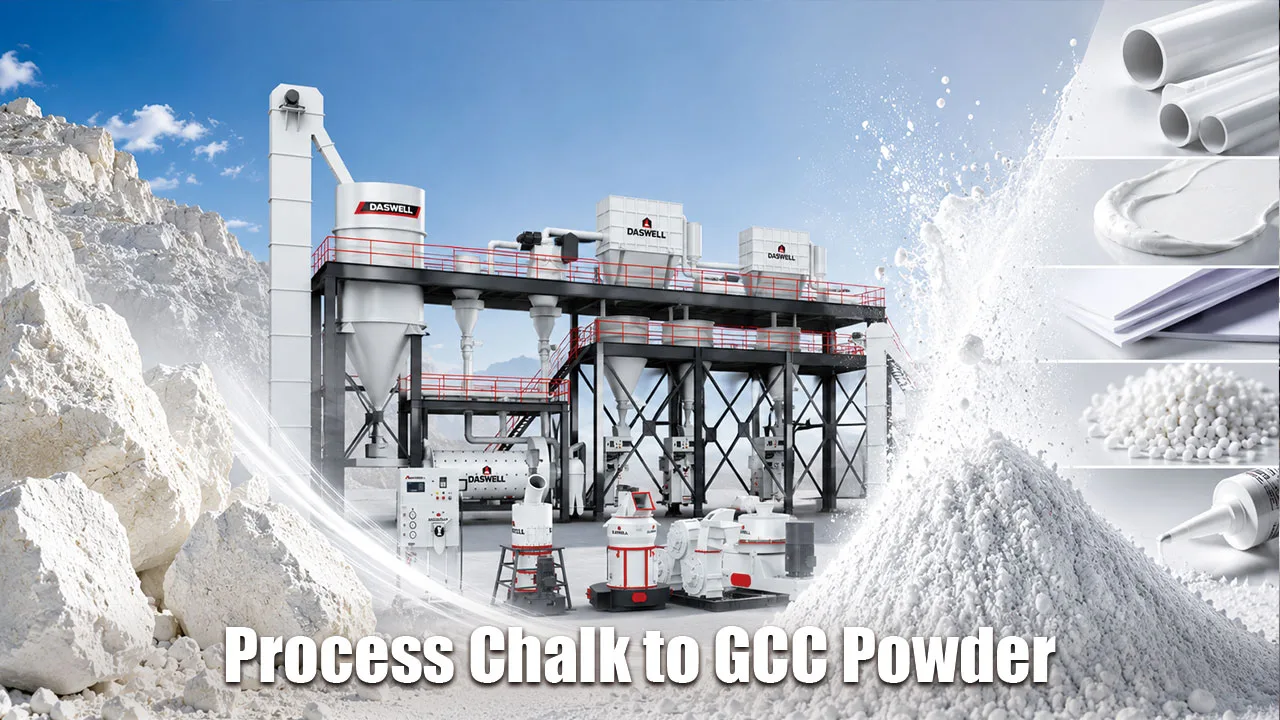
Turning raw chalk into high-value GCC powder requires advanced powder processing technology. A typical chalk processing plant includes: Crushing → Grinding → Classifying → Surface Coating (optional) → Packing
Based on your different requirements for the final powder fineness and application requirements, there are various equipment configurations for your recommendation. For example:
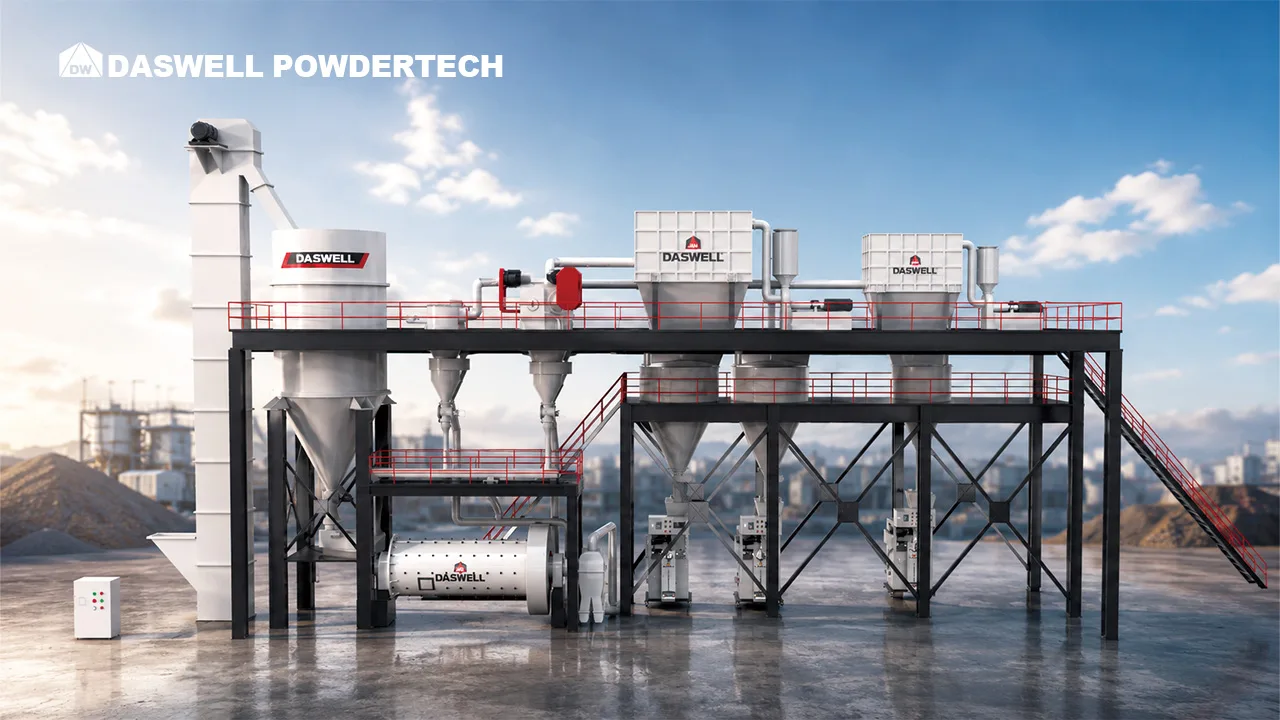
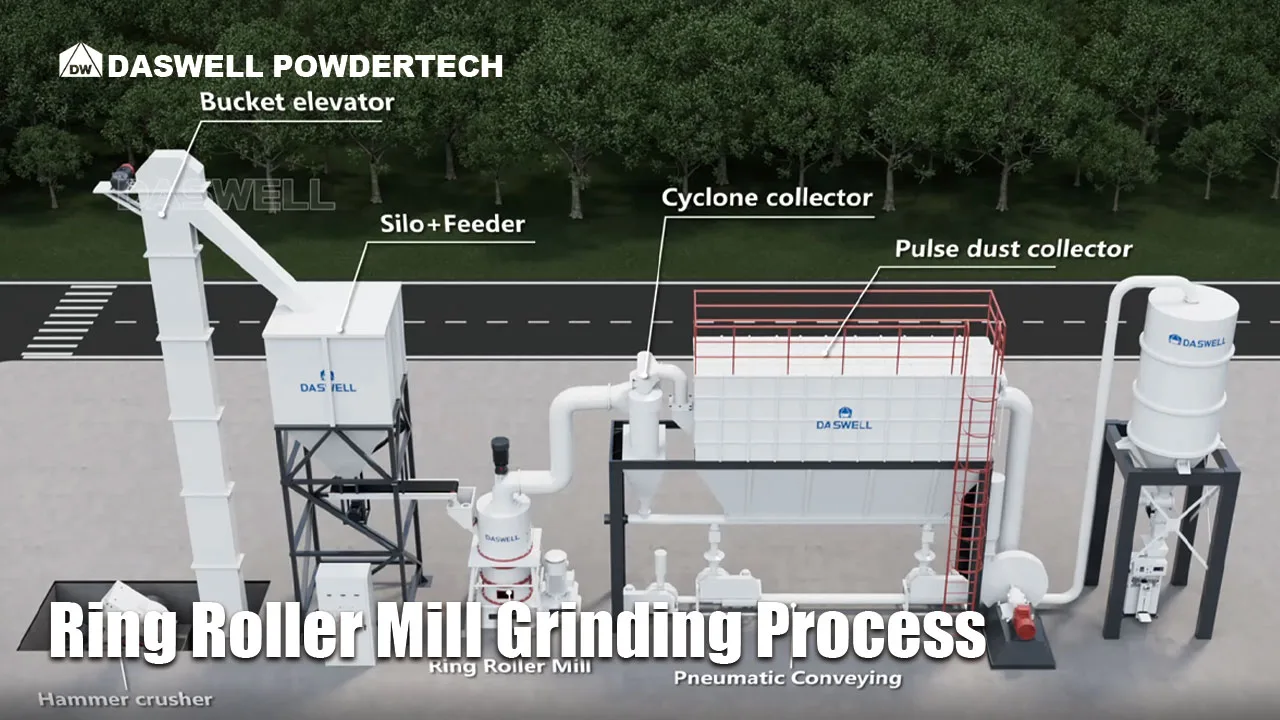

The final powder quality depends not only on grinding fineness, but also on particle size distribution, coating performance, and powder stability.
How to Get Chalk and GCC Processing Solutions?
As a professional mineral powder processing equipment supplier, Daswell Powder provides complete GCC powder production line solutions for chalk and calcium carbonate processing. From pre-grinding for raw materials crushing, grinding, classifying, to surface coating and packing, we provide different configurations.
According to the different properties of raw materials, final powder fineness requirements, and the application industries, we design special powder processing solutions. Daswell Powder helps customers build efficient and profitable powder processing plants, turning your raw chalk into application-ready functional calcium carbonate powder.
If you are planning to build or upgrade a calcium carbonate processing plant, Daswell Powder can provide customized GCC production solutions for your project.
Contact Daswell Powder today to learn more about our chalk and calcium carbonate processing systems.