
How Grinding Aids Improve Calcium Carbonate Grinding Efficiency?
In mineral powder processing industries such as mining, chemicals, building materials, and metallurgy, grinding is one of the most energy-intensive and cost-critical stages. Especially in calcium carbonate powder production, many manufacturers invest more in advanced equipment like ball mills, ring roller mills, and high-efficiency classifiers to improve the capacity.
While in real industrial production, only advanced equipment is not enough. The key to improving production efficiency, reducing energy consumption, and stabilizing powder quality lies in process optimization. The proper use of grinding aids plays an important part.
What Are Grinding Aids?
Grinding aids are chemical additives used in very small quantities during the grinding process, typically less than 0.25% of the feeding material. Their main function is to optimize the grinding environment, reduce energy loss, and improve particle breakage efficiency.
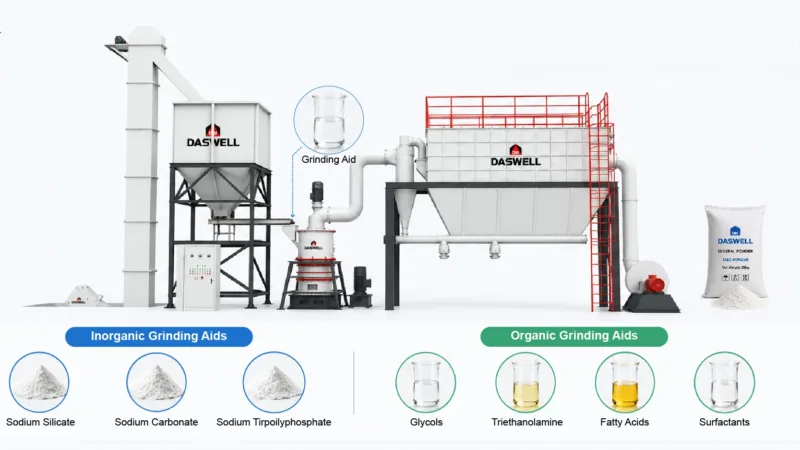
According to their chemical properties, grinding aids are generally divided into:
In industrial mineral powder processing, the commonly used grinding aids include alcohol amines and salt-based additives. They can highly improve grinding performance effectively.
What Limits Calcium Carbonate Grinding Production?
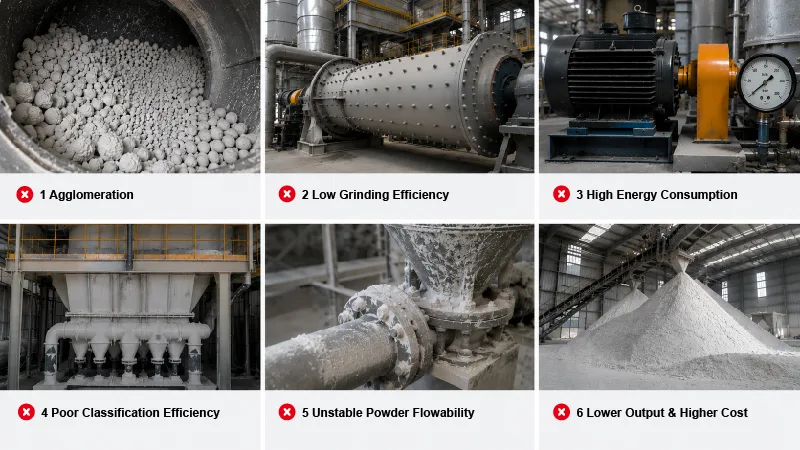
In calcium carbonate grinding production, several hidden bottlenecks can significantly affect overall efficiency and product quality. Even with advanced equipment such as ball mills, ring roller mills, or Raymond mills, these challenges still exist.
These combined issues ultimately result in lower production output, higher operating and energy costs, and inconsistent product quality and performance. Addressing these bottlenecks is essential for achieving stable, efficient, and high-value calcium carbonate production.
How Do Grinding Aids Work?
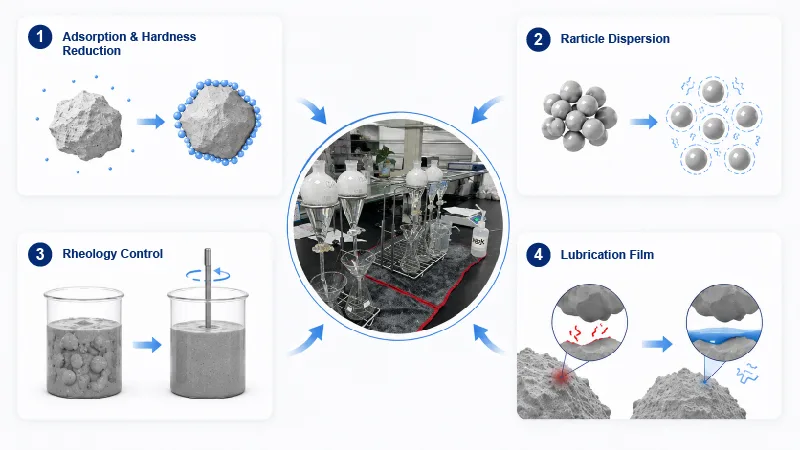
The effectiveness of grinding aids can be explained by several widely accepted theories:
Grinding aids transform inefficient mechanical grinding into a more effective physicochemical process.
How Grinding Aids Improve Grinding Production?
In industrial practice, using standard grinding aids, the production capacity increases 10%. If you choose the high-performance aids, it may increase 30%-35%.
Taking the ball mill production line as an example, using grinding aids can reduce over-grinding and increase output stability. For the ring roller mill system, the grinding agents can help reduce material accumulation inside the mill. Thus, the internal airflow and grinding dynamics will be improved as well. This allows existing equipment to achieve higher capacity without additional investment.
Grinding aids help reduce internal resistance during the grinding process, saving 10% energy. With special grinding aids, which is mainly used for reducing energy consumption, it can save about 15%-20%.
For example, in ball mill grinding systems, it reduces the energy loss from coating. And it is also helpful for improving airflow and classification efficiency in ring roller mill system. Then, the power consumption per ton of finished product is highly lowered.
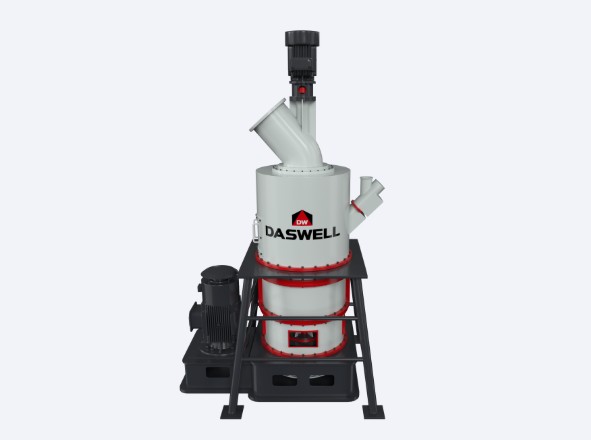
Daswell Powder Grinding Mills for Your Reference
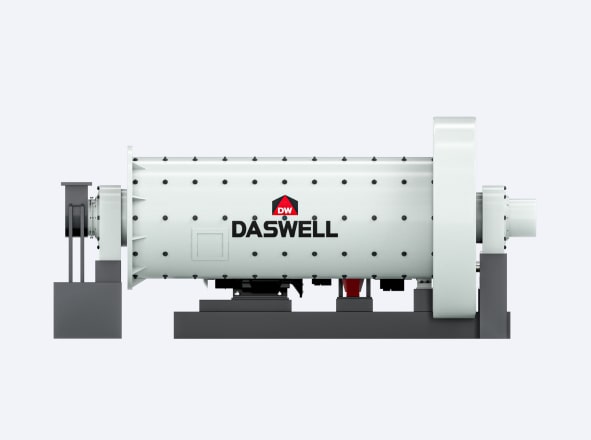
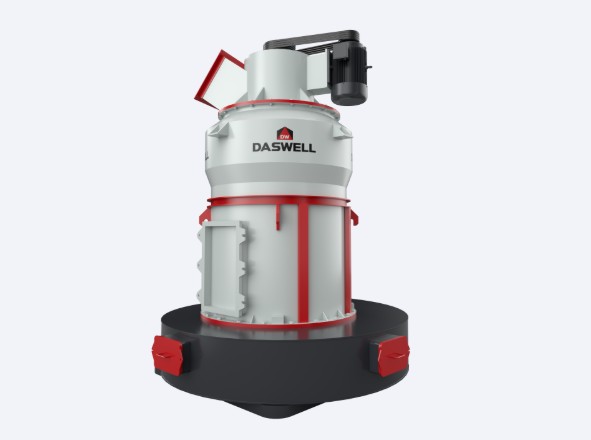
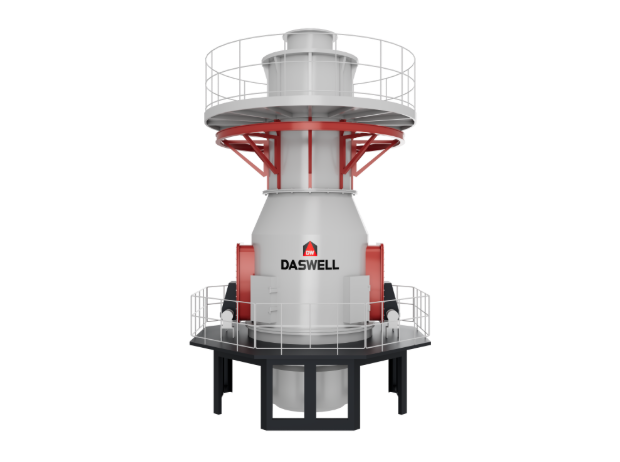
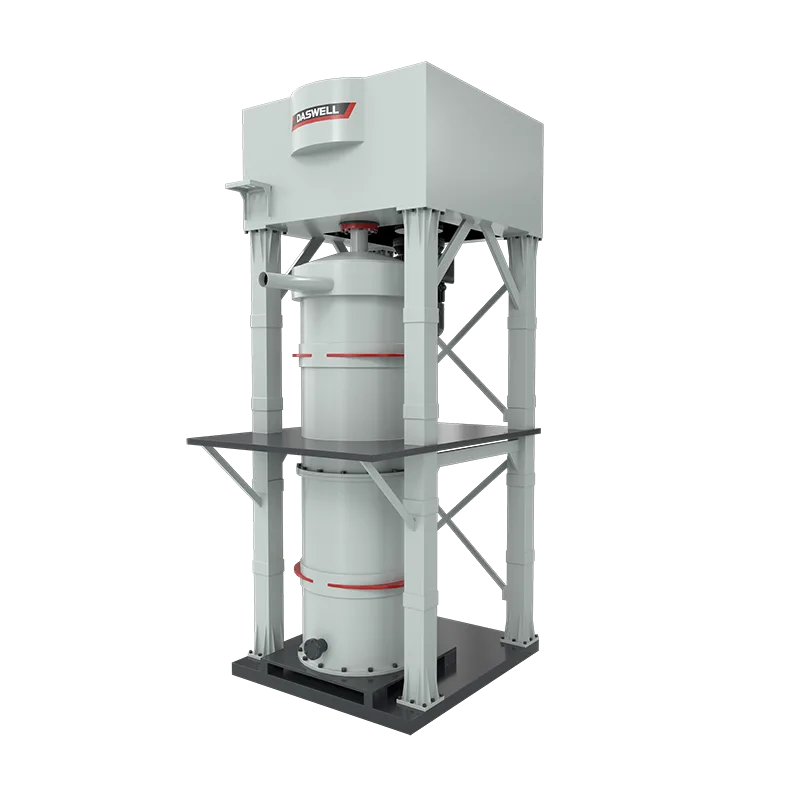
Grinding production is not only about the grinding process. It is also about classification. Grinding aids improve particle dispersion after grinding, separation efficiency in classifiers, and the accuracy of cut size.
In the classifying process, the grinding aids can increase fine powder yield, reduce coarse particle return, and improve classification precision. Then the proportion of qualified fine powder will be higher.
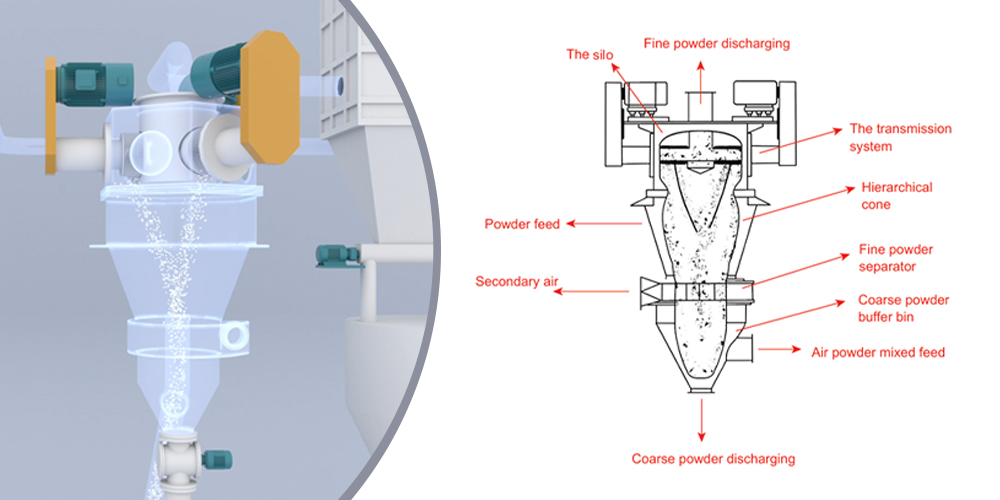
Especially for the ball mill and classifier solutions, the grinding aids prevent material coating on grinding media and liners, allowing energy to be used more effectively for particle breakage. The grinding efficiency will be higher without changing the equipment configuration.
Grinding aids reduce particle surface energy and prevent re-agglomeration. This allows better particle dispersion, more effective grinding collisions, and faster size reduction.
Daswell Powder offers you pneumatic conveying systems, dust collectors, and automatic packing machines for your whole mineral powder processing project.
The grinding aids help reduce powder adhesion inside pipelines and prevent blockage in cyclones and silos. Meanwhile, it also ensures stable feeding and discharging.
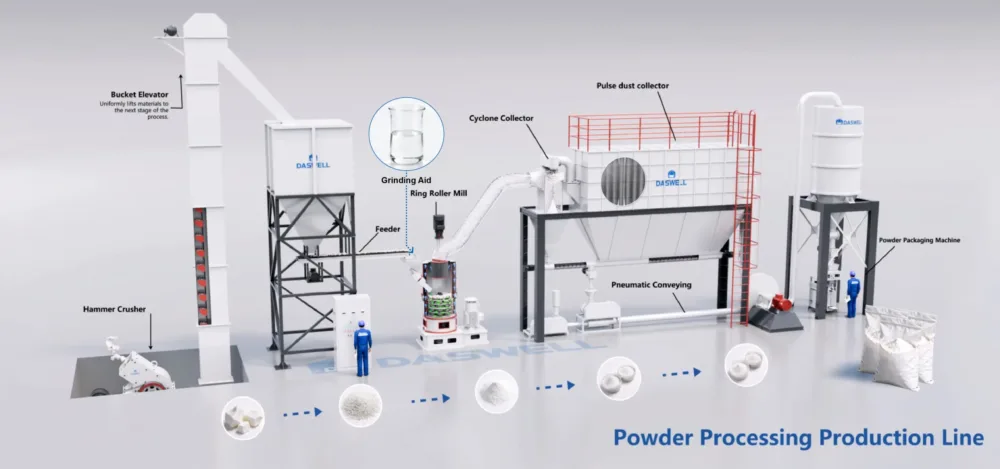
Daswell Powder Integrated Solution: Equipment + Process Optimization
At Daswell Powder Technology, we provide not only individual machines, but also complete calcium carbonate grinding solutions. We combine advanced equipment with process optimization strategies to maximize grinding efficiency and powder quality.
Our core grinding solutions include ball mill + classifier production lines, ring roller grinding mill plants, coating plants for powder surface modification, etc.
Except for the equipment, we integrate customized grinding aid solutions into your system based on:
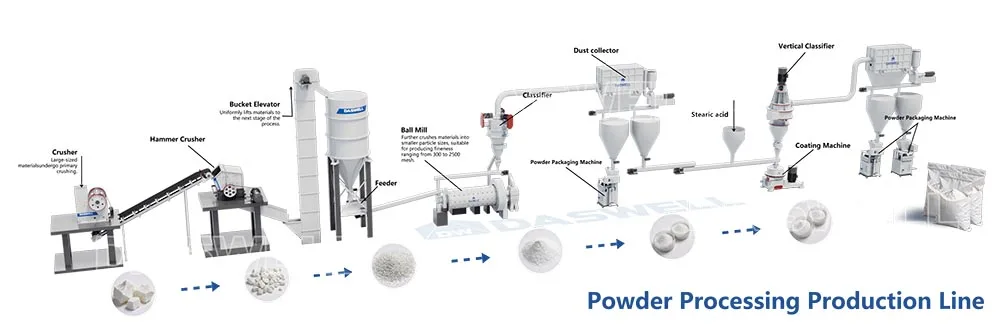
The grinding aids are moving toward customized solutions for different minerals and grinding mills. Meanwhile, there will be multi-functional composite additives, which can be used for both grinding and modification. These innovations aim to further improve efficiency while reducing environmental impact and cost.
In modern calcium carbonate production, grinding aids are no longer optional additives. They are essential process tools. By combining advanced grinding equipment, optimized process design, and proper grinding aid application, we help our customers achieve:
If you are looking to upgrade your calcium carbonate production line, Daswell Powder Technology can provide a complete solution for you. From equipment to process optimization and grinding aid integration, we can meet your needs. Contact us now!