
How to Choose Grinding Mill for Your Mineral Powder Processing?
In the mineral powder processing industry, choosing the right grinding equipment is critical for powder fineness, production efficiency, energy consumption, and final product applications. However, different grinding mills are suitable for different minerals, fineness requirements, capacities, and investment budgets.
So, how do you choose the right grinding mill for your mineral powder processing project?
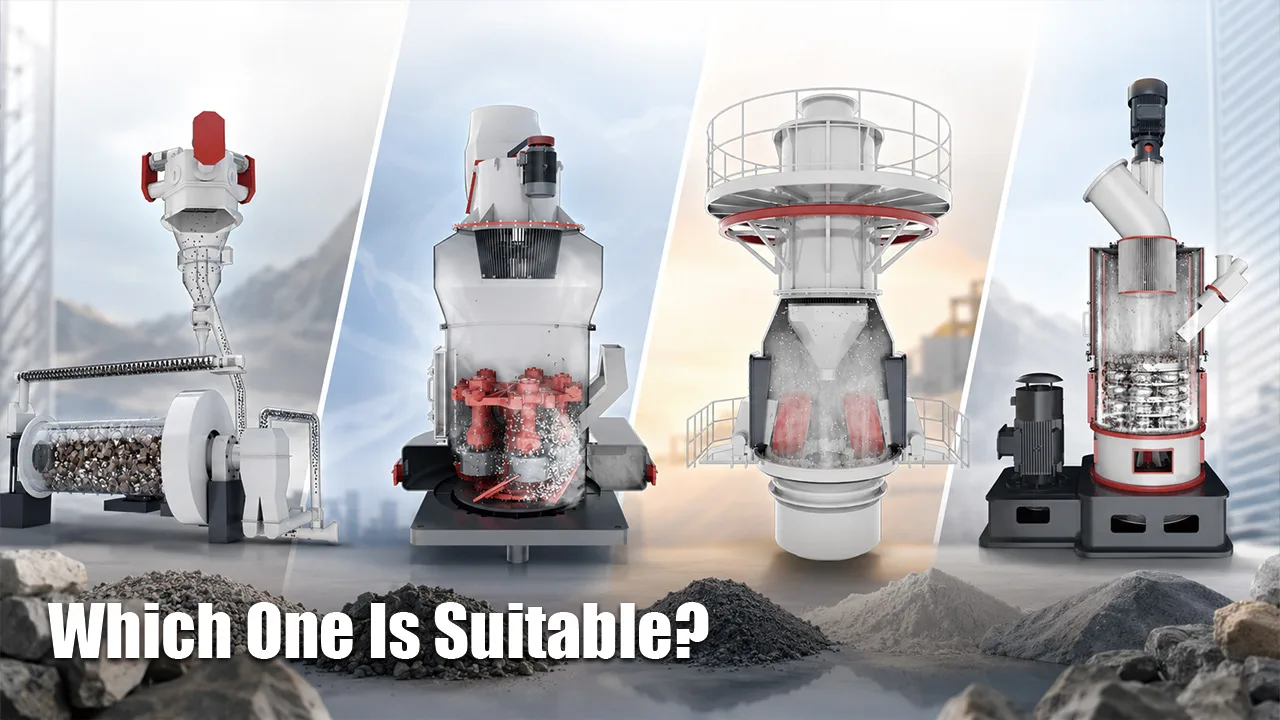
Among all the mineral powder grinding mills, ball mill, ring roller grinding mill, Raymond mill, and vertical mills are commonly used. Each grinding system has different advantages, and they are suitable for different production targets.
As a professional mineral powder processing solution supplier with rich experience, Daswell Powder Tech. provides customized grinding solutions for calcium carbonate, limestone, quartz, talc, barite, kaolin, gypsum, and some other minerals. According to your different requirements, we offer you the matching grinding mills and solutions.
In this article, we compare four commonly used grinding systems: ball mill, Raymond mill, ring roller grinding mill, and vertical mill, helping you select the most suitable solution for your production.
What Factors Should You Consider Before Choosing a Grinding Mill?
Which Grinding Mill is Suitable for Your Different Powder Processing?
Ring Roller Mill: Energy-Saving Solution for Fine Calcium Carbonate Powder
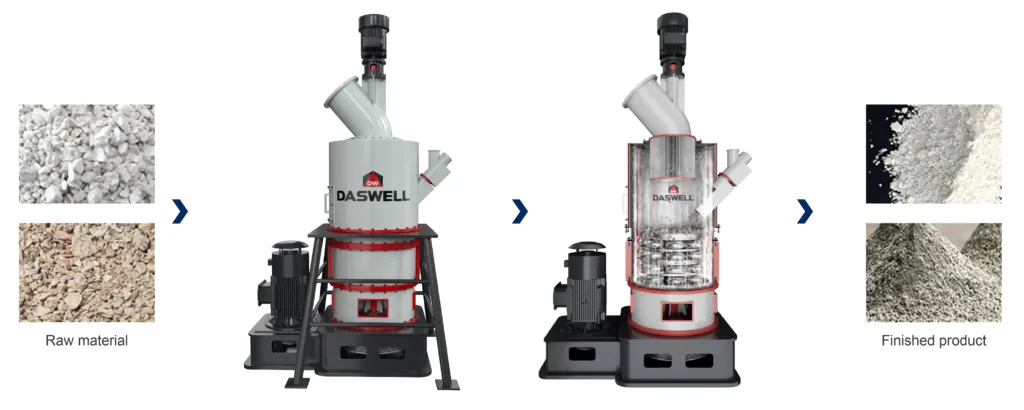
Ring roller grinding mill is one of the most popular grinding solutions in the ultrafine powder industry today. It meets different fineness requirements from coarse to ultrafine powders. And its compact structure saves more space than other grinding mills.
It has been widely used in calcium carbonate processing plants among our customers. Because this grinding system has high efficiency and flexible production capability, it is applicable for processing calcium carbonate, calcite, marble, talc, kaolin, etc.
The ring roller mill is generally suitable for producing powders from 800 mesh to 2000 mesh.
And it is especially suitable for applications in plastics, masterbatch, coatings, rubber, and other industries requiring fine calcium carbonate powders.
Advantages of Ring Roller Mill
Limitation of Ring Roller Mill
If you want to produce 10-20 micron ultrafine calcium carbonate production with high efficiency and lower investment, ring roller grinding mill is one of the best choice.
Ball Mill Grinding System: Best for Ultrafine Powder Production
Ball mill is one of the most traditional and widely used grinding mills in the market. It utilizes grinding media inside the rotating cylinder to crush and grind materials into fine powders. Its wide adaptability for minerals makes it popular for mineral powder processing projects. You can use it for grinding calcium carbonate, calcite, limestone, chalk, kaolin, quartz, talc and so on.
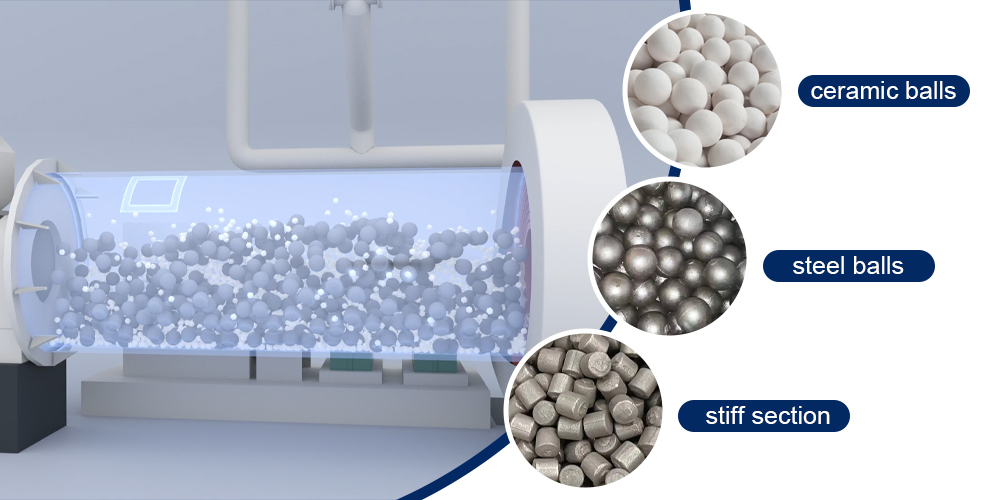
In the mining and mineral processing industry, it is often used with a turbo classifier. This forms a complete closed-loop grinding and classifying system. This solution is especially suitable for producing ultrafine calcium carbonate and other high-value mineral powders.
Combined with the turbo classifying equipment, the ball mill grinding solution can generally produce powders from 600 mesh to 3000 mesh with stable particle size and distribution.
This grinding solution is widely used for producing ultrafine mineral powders for plastics, coatings, rubbers, sealants, and paper industries.
Advantages of Ball Grinding Mill
Limitations of Ball Grinding Mill
For the customers who require high whiteness, fine particle size, and stable large-scale production, the ball mill grinding plant is one of the most reliable choices. Especially, according to your different materials and requirements, we can customize the liner and grinding media.
Raymond Mill: Cost-Effective Choice for Medium Fineness Powder
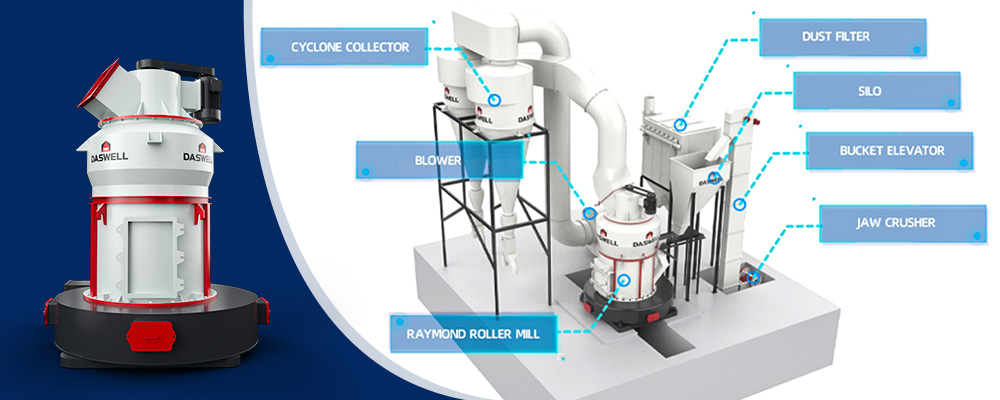
Raymond mill is a classic roller grinding machine. It is widely used in medium-fineness mineral powder processing. Compared with ball mill grinding equipment, Raymond mill machine has a simpler structure and a lower investment cost. You can use it for grinding calcium carbonate, limestone, marble, chalk, talc, barite, kaolin, gypsum, etc.
This grinding mill is especially suitable for customers, who need economical powder production with moderate fineness requirements. Typically, the Raymond mills produce powders under 400 mesh.
Raymond mills are commonly used for ordinary GCC powders, fillers, building materials, low-cost plastics, and cost-sensitive mineral powder markets.
Advantages of Raymond Mill
Limitation of Raymond Mill
For your project, which needs to produce powders under 400 mesh with controlled investment budgets, Raymond mills are still highly cost-effective solutions.
Vertical Mill: Large-Scale and Energy-Efficient Production Solution
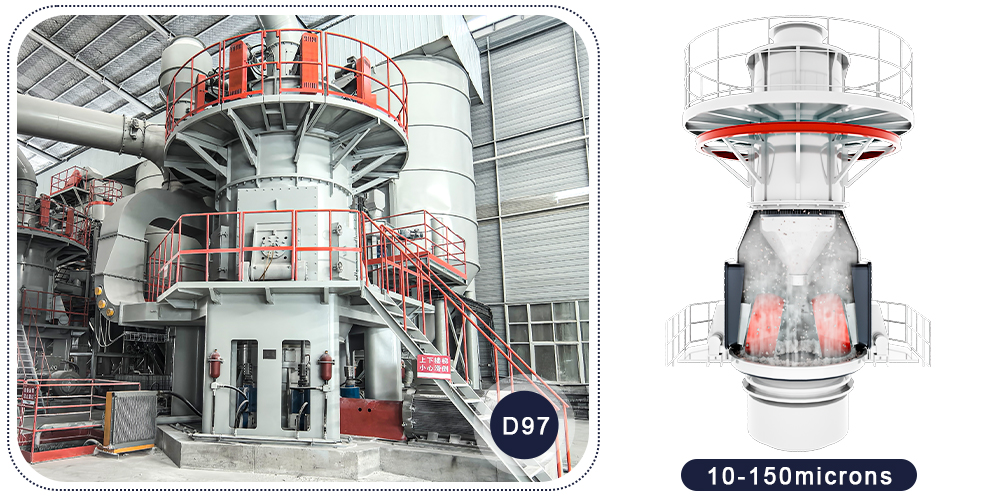
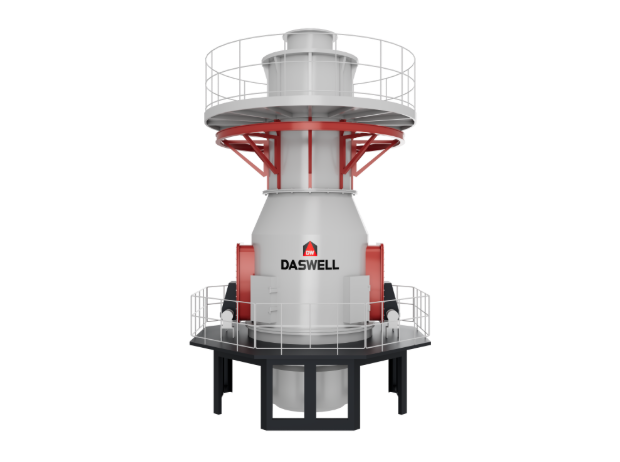
Vertical mills are modern grinding systems integrating crushing, grinding, drying, and classifying into one machine. Compared with the traditional grinding equipment, it offers higher energy efficiency and larger production capacity. It is suitable for materials, including calcium carbonate, limestone, marble, kaolin, gypsum, barite, and so on.
The vertical mill can be divided into two types: coarse and fine grinding types. They can be used for producing fineness requirements of 320 to 800 mesh and 600 to 3000 mesh.
This system is suitable for large-scale industrial mineral powder production requiring continuous operation, energy saving, and stable product quality.
Advantages of Vertical Mill
Limitation of Vertical Mill
For the large industrial projects, which focus on energy saving and continuous large-capacity production, vertical mill system is an excellent solution.
How to Choose the Suitable Grinding Mill for Your Project?
Different grinding mills are applicable for different production targets. There is no best machine for every project. The correct choice depends on the raw material hardness, target fineness, production capacity, energy consumption requirements, investment budget, and downstream applications.
| Type | Fineness | Capacity | Energy | Investment | Best For |
| Ball Mill | 600–3000 mesh | High | High | High | Ultrafine powder |
| Raymond Mill | under 400 mesh | Medium | Medium | Low | Cost-sensitive GCC |
| Ring Roller Mill | 325-3000 mesh | Medium–High | Low | Medium | 10–20 μm GCC |
| Vertical Mill | 320-800 mesh and 600-3000 mesh | Very High | Low | High | Large-scale production |
Generally speaking:
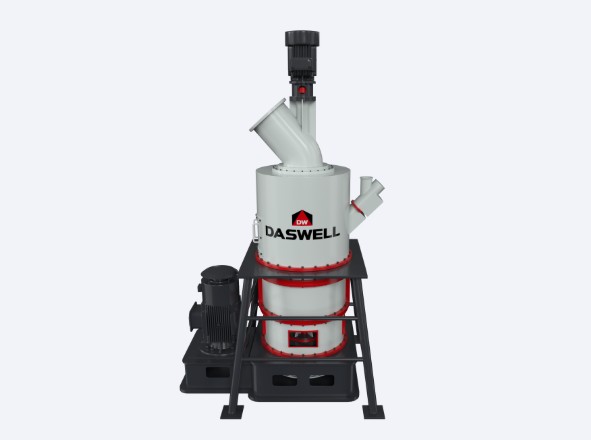
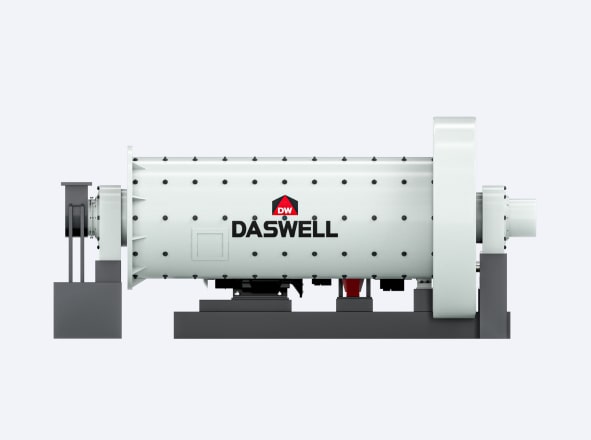
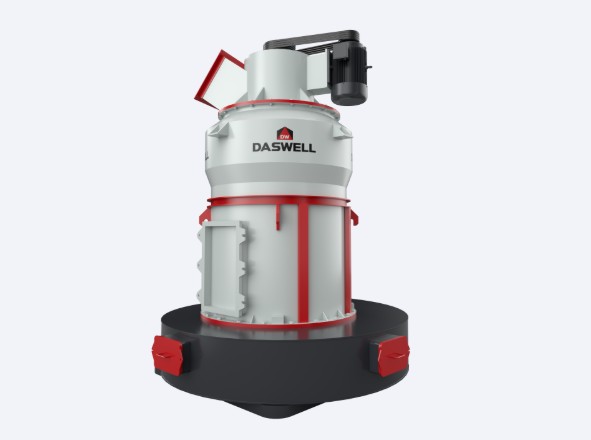
Except for the grinding mills, Daswell Powder provides complete mineral powder processing solutions from crushing, grinding, classifying, coating, conveying, dust collection to automatic packing systems. Whether for your GCC powder, quartz powder, talc powder or some other mineral materials, we can meet your needs.
Not sure which grinding mill is suitable for your project? Tell us your raw material, target fineness, and production capacity requirements. Daswell Powder can recommend a customized grinding solution for your mineral powder processing needs.