
Limestone Production Line
Daswell Powder Tech has been specializing in the lime industry for many years and provides customers with complete solutions from limestone calcination to rapid cooling and hydrated lime processing.
The lime production line is designed with high thermal efficiency, stable quality, automated control, and safety and environmental protection as core principles, and is widely used in metallurgy, building materials, environmental protection, chemical industry, mining, and other industries.
Engineering-driven solutions with proven global project experience.
Covers vertical kiln, rotary kiln, and hydrated lime plants.
Designed for metallurgy, construction materials, environmental protection, and chemical industries.
Integrated solution: process design, equipment supply, installation, and after-sales support.
Application Scenarios in the Lime Production Industry

Lime for Steel and Metallurgy Lime for water treatment and environmental desulfurization Building materials and mortar industry
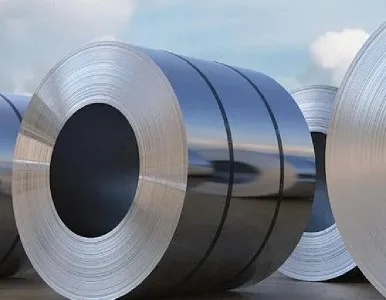
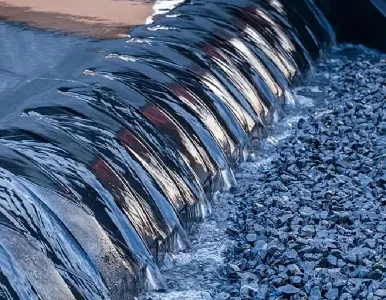
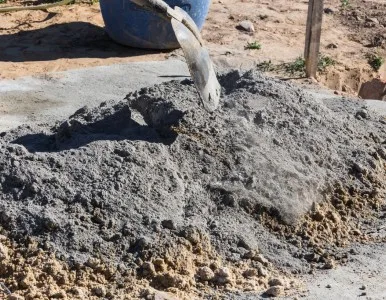

Chemical-grade lime and hydrated lime powder Mineral Processing and Filler Industry
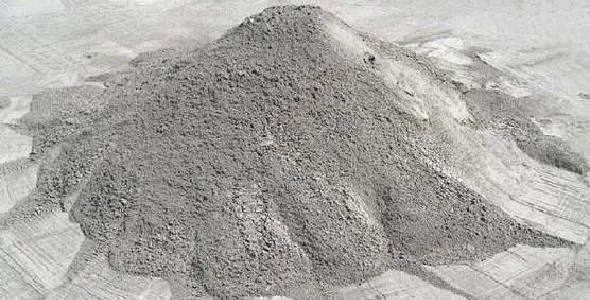
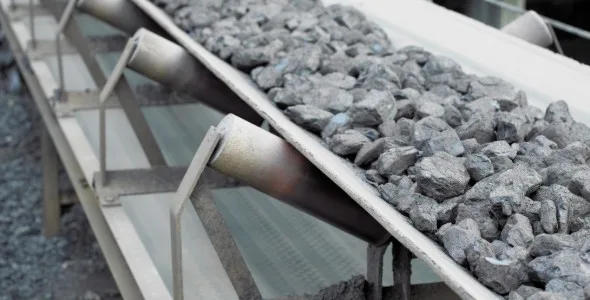
Lime Production Process Flow
Which Lime Production Line Should You Choose?
Both vertical kiln and rotary kiln lime production lines are mature and reliable solutions. The right choice depends on required capacity, investment budget, fuel conditions, product quality requirements, and long-term production plans.
For medium-capacity projects with limited space and controlled investment, the vertical kiln lime production line offers an efficient and economical solution.
For large-scale, continuous production with strict requirements on lime quality and energy efficiency, the rotary kiln lime production line is the preferred option.
Daswell engineering team will evaluate your raw material, capacity demand, and application requirements to recommend the most suitable lime calcination system for your project.
👉 Tell us your production needs, and we will provide a customized Limestone Production Line solution.
Vertical Kiln Lime Production Line – Process & Features
The vertical kiln lime production line is designed for continuous and stable quicklime production with precise process control and high thermal efficiency.
Crushed limestone is first fed into the top of the vertical kiln through a weighing and distribution system. The feeding rate of limestone and fuel is accurately matched according to the lime calcination process requirements. Inside the kiln, the material moves downward slowly by gravity, passing through different functional zones for preheating, calcination, and cooling.
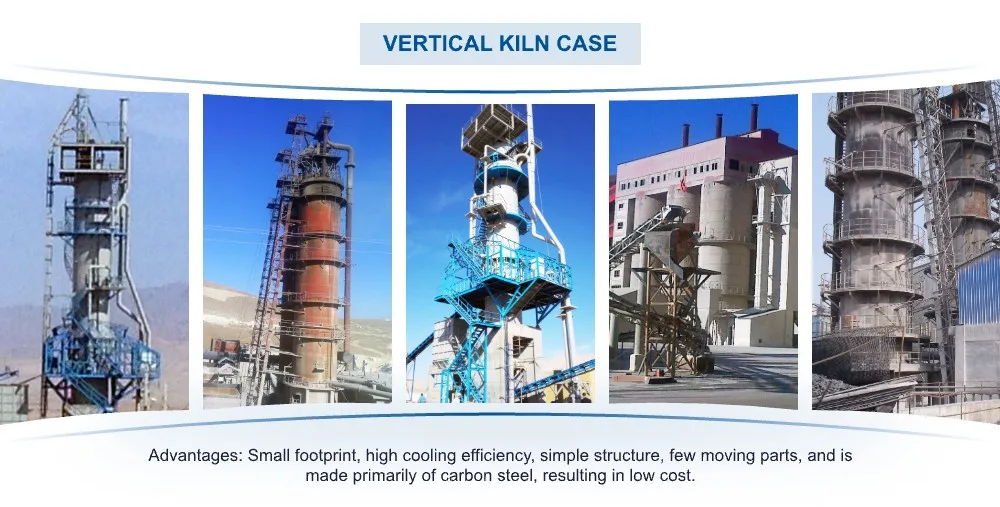
During operation, combustion air volume and fuel feeding are automatically adjusted based on real-time process parameters. This intelligent control system ensures uniform temperature distribution inside the kiln, resulting in consistent calcination and stable quicklime quality. The finished quicklime is continuously discharged from the bottom of the kiln and conveyed to storage or downstream processing systems.
At the kiln outlet, a vertical cooler is used to cool the hot lime efficiently. The secondary air introduced for cooling is heated during this process and reused as combustion air, significantly improving overall energy utilization and reducing fuel consumption.
The vertical kiln system is equipped with an advanced vertical preheater, which transfers waste heat from the flue gas directly to the limestone. As a result, the exhaust gas temperature can be reduced to below 280°C, effectively recovering heat that would otherwise be lost and reducing the load on the dust collection system.
The kiln hood and cooler adopt an integrated vertical design, requiring less land space while maintaining excellent sealing performance. This structure prevents hot exhaust gas leakage and improves environmental performance. Combustion air is divided into primary air and secondary air, each supplied by independent blowers. Primary air participates directly in combustion, while secondary air serves as cooling air and preheated combustion air. The secondary air temperature can reach up to 600°C, further reducing fuel consumption.
With a reasonable kiln height-to-diameter ratio, high-quality refractory lining, and effective thermal insulation, the vertical kiln lime production line achieves low heat loss, reliable long-term operation, and reduced maintenance requirements. The fully automated operation minimizes labor intensity and improves production safety by avoiding direct operator exposure to high-temperature and hazardous environments.
Key Advantages
- Precise control of limestone and fuel ratio
- Stable temperature zones for uniform calcination
- Effective waste heat recovery and low energy consumption
- Compact layout and reduced land occupation
- High automation level with low labor intensity
- Reliable operation and consistent quicklime quality
- Production Capacity
- Available capacity range: 100–500 tons per day
- Suitable for medium-scale lime production projects
Technical Parameter
|
Capacity (t/d) |
Preheater |
Kiln Size (m) |
Rotary BumingKiln Temperature(℃) |
Blocking-wheel Mode |
Heat Consumption (KJ/KgCaO) |
|---|---|---|---|---|---|
|
150 |
4 Pusher head |
φ2.5× 40 |
1350/1250 |
Hydra |
5300/ 5000 |
|
200 |
4 Pusher head |
φ2.8× 42 |
1350/1250 |
ulic or Mech |
5300/ 5000 |
|
250 |
4 Pusher head |
φ3.0× 48 |
1350/1250 |
anical |
5300/ 5000 |
|
300 |
6 Pusher head |
φ3.2× 54 |
1350 |
Hydraulic |
5200 |
|
400 |
8 Pusherhead |
φ3.4× 54 |
1350 |
Hydraulic |
5200 |
|
500 |
8 Pusherhead |
φ4.0× 52 |
1350 |
Hydraulic |
5100 |
|
600 |
12 Pusher head |
φ4.0×60 |
1350 |
Hydraulic |
5100 |
|
800 |
14Pusher head |
Φ4.5× 64 |
1350 |
Hydraulic |
4810 |
|
1000 |
18 Pusher head |
φ4.9× 70 |
1350 |
Hydraulic |
4810 |
|
1200 |
22 Pusher head |
φ5.24×72 |
1350 |
Hydraulic |
4810 |
Rotary Kiln Lime Production Line – Process & Features
Suitable for large-scale, continuous industrial lime production projects.
The rotary kiln lime production line is designed for medium to large-scale quicklime production, delivering high output, uniform calcination, and excellent lime activity through continuous and stable operation.
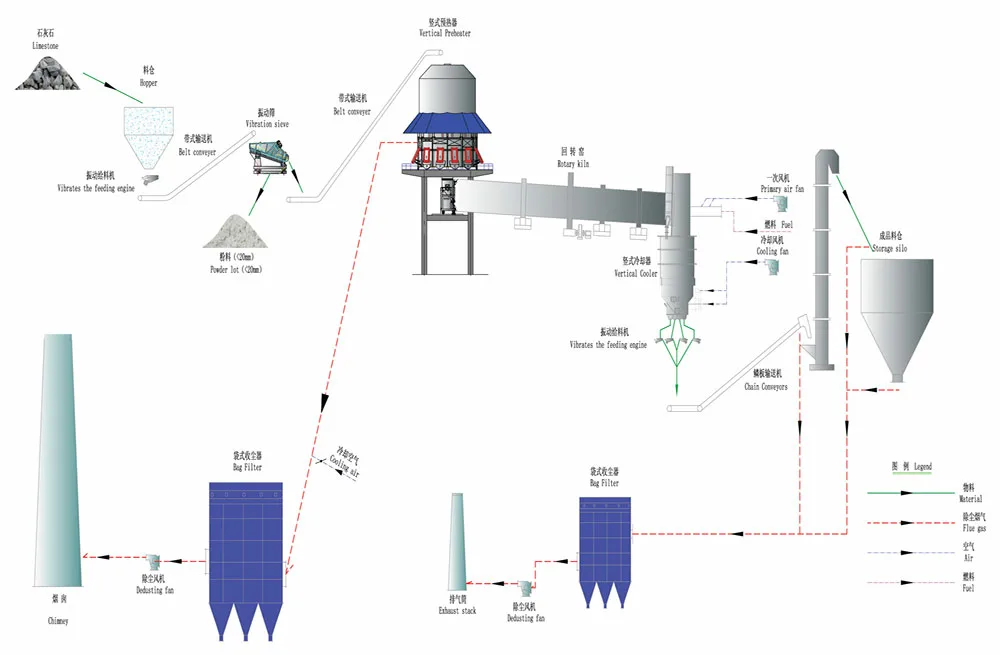
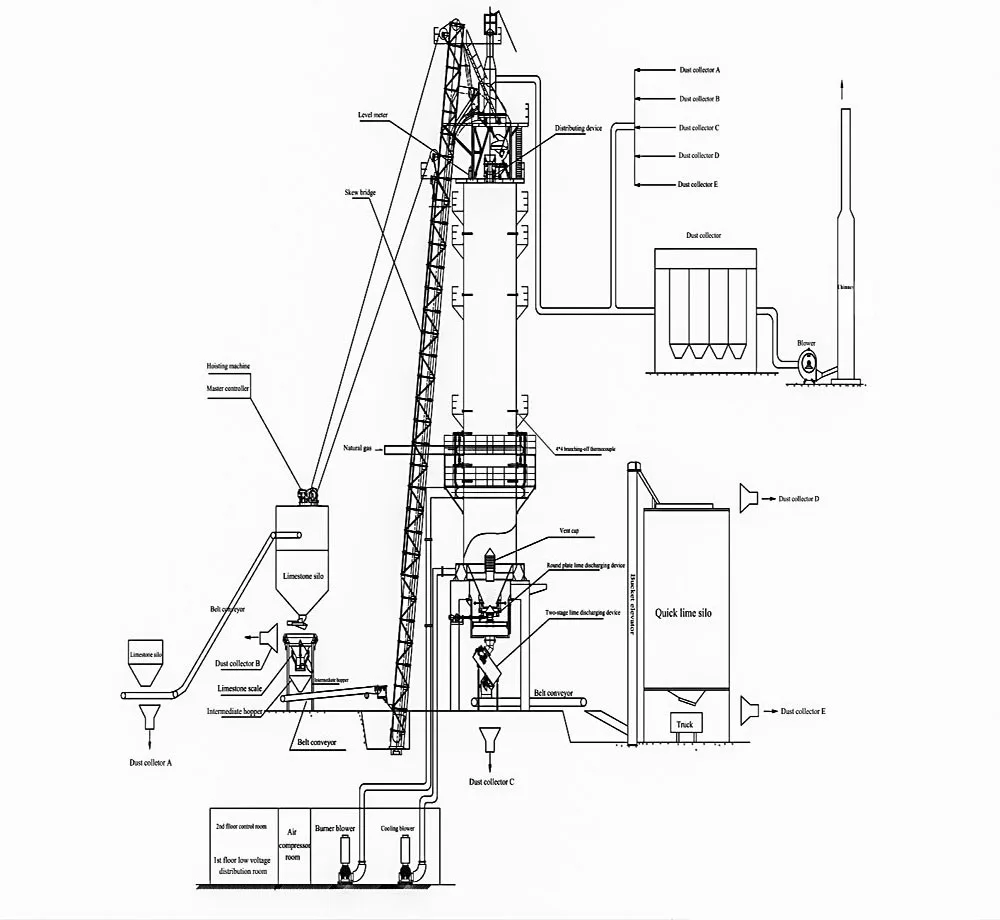
Qualified limestone is first stored in the raw material silo and conveyed by bucket elevator to the top of the vertical preheater. Inside the preheater, limestone is evenly distributed and preheated by high-temperature exhaust gas from the rotary kiln. During this stage, approximately 30% of the limestone begins to decompose, significantly reducing fuel consumption in the main kiln.
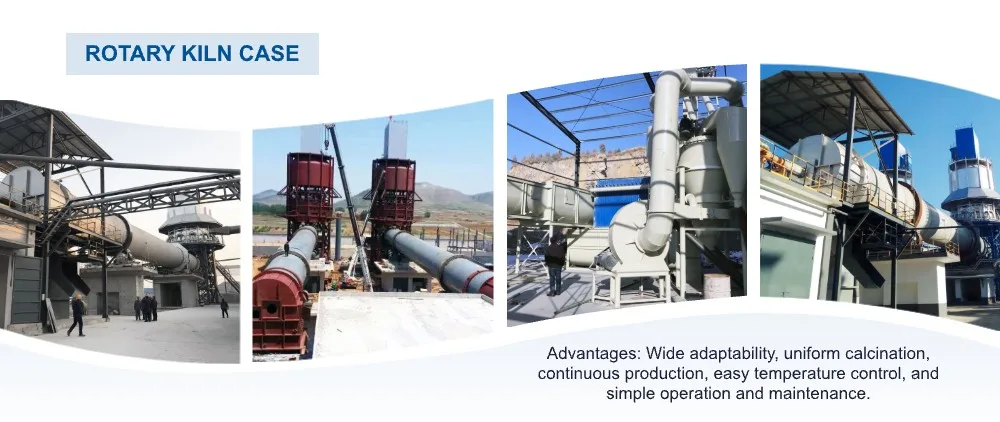
The preheated limestone is then pushed into the rotary kiln by a hydraulic pusher system. Inside the kiln, the material rotates continuously and is calcined at high temperature, typically 1250–1350 °C, ensuring uniform heat transfer and consistent chemical reaction. Limestone is decomposed into CaO and CO₂ through controlled sintering.
After calcination, hot quicklime is discharged from the kiln head into a vertical cooler, where it is rapidly cooled by secondary air. During cooling, the secondary air absorbs heat from the lime and is heated to temperatures of up to 600 °C, then reused as combustion air for the kiln. This heat recovery design greatly improves energy efficiency and reduces overall fuel consumption.
Exhaust gas from the kiln passes through a dust collection system and is discharged through the chimney by induced draft and exhaust fans, ensuring low dust emission and stable environmental performance. The cooled quicklime is conveyed through vibrating feeders, chain bucket conveyors, bucket elevators, and belt conveyors to the finished product silo. Screening and downstream processing can be configured according to customer requirements.
Intelligent Control & System Design
The rotary kiln lime production line adopts an intelligent automatic control system to precisely regulate the limestone-to-fuel ratio, combustion air volume, and kiln operating pressure. Through online analysis of exhaust gas composition, the system automatically adjusts fuel feeding and air supply, ensuring stable temperature zones and reducing labor intensity.
A reasonable kiln diameter-to-length ratio, combined with high-performance thermal insulation, effectively reduces heat loss and improves overall production efficiency. The kiln hood and cooler adopt an integrated vertical design with excellent sealing performance, preventing hot gas leakage and minimizing heat loss.
The entire production process is fully automated, reducing operator exposure to high-temperature environments and carbon monoxide, improving operational safety, and lowering lime production costs through reduced material handling and stable long-term operation.
Key Technical Features
- Kiln lining made of high-strength, wear-resistant high-alumina refractory bricks, providing excellent thermal insulation and extended service life
- Thermal insulation is applied to kiln steel structures to minimize heat loss
- Inclined bridge-type bucket elevator with bell-cap lifting device and rotating distributor for uniform material feeding
- Material level detectors are installed at the kiln top to monitor upper and lower material limits
- Dual electronic weighing system with automatic error compensation for accurate raw material feeding
- Spiral cone discharge device at the kiln bottom, ensuring continuous and uniform material movement
- Independent high-pressure blowers with variable frequency control for cooling air supply
- Automatic kiln top pressure control with a multi-stage dust purification system, achieving very low exhaust dust concentration
Production Capacity
Available capacity range: 150–1200 tons per day
|
Model |
Capacity (t/d) |
Effective volume (m²) |
Volume production (Vm³d) |
|---|---|---|---|
|
VK-φ3.0m*18.5m |
100 |
127 |
0.7-0.8 |
|
VK-φ32m*18.5m |
120 |
148 |
0.7-0.8 |
|
VK-φ3.6m*21.5m |
150 |
219 |
0.7-0.8 |
|
VK-φ4.2m*21.5m |
200 |
296 |
0.7-0.8 |
|
VK-φ4.8m*24.5m |
300 |
443 |
0.7-0.8 |
|
VK-φ5.3m*26.5m |
400 |
585 |
0.7-0.8 |
|
VK-φ6.0m*30.5m |
500 |
850 |
0.7-0.8 |
Selection of Lime Calcination System Options
|
Item |
Vertical Kiln Lime Plant |
Rotary Kiln Lime Plant |
|---|---|---|
|
Recommended Capacity |
100–500 t/day |
150–1200 t/day |
|
Investment Level |
Lower |
Higher |
|
Plant Layout |
Compact, small footprint |
Larger footprint |
|
Production Mode |
Semi-continuous / continuous |
Fully continuous |
|
Product Uniformity |
Good |
Very high |
|
Energy Efficiency |
High |
Very high (with preheater & cooler) |
|
Fuel Flexibility |
Good |
Excellent |
|
Automation Level |
High |
Very high |
|
Typical Applications |
Medium-scale projects, cost-sensitive investment |
Large-scale industrial lime production |
Slaked Lime Production Solutions
Supports various capacities from 3–30 t/h
Multi-stage hydration with precise water volume control
High product whiteness and stable activity
An optional fully automatic PLC control system
Why choose Daswell Lime Solutions?
High-efficiency waste heat recovery, reducing energy consumption
High-quality refractory materials, extending service life
Fully automated process, reducing labor costs
Low-emission design, meeting environmental requirements
Mature overseas project experience, ensuring reliable delivery
Daswell Powder Tech Services
It’s not just equipment, but a complete engineering solution.
Process Design
Equipment manufacturing and system integration
Installation, commissioning, and personnel training
Long-term after-sales service and spare parts support
Please tell us about your raw materials and required production capacity, and we will provide you with a comprehensive solution.